What Is a Wheel Bolt Pattern, and Why Does It Matter for Replacement
Quick Answer:
The wheel bolt pattern, or Pitch Circle Diameter (PCD), specifies the exact count of lug holes and the diameter of the imaginary circle running through their centers. When sourcing replacement wheels and related components, it is important to check for the correct PCD, centerbore, and offset.
Strict compliance prevents severe vibration, stud failure, and rotational imbalance on heavy loads. CNRL Auto Parts helps ensure hub alignment by supplying a wide range of high-tensile fasteners, including camber bolts and wheel nuts. All CNRL hardware is precision-manufactured within ANSI, ISO, and other global standards.
Wheel Bolt Pattern Meaning: What Does 5×114.3 Actually Mean?
The wheel bolt pattern is the specific mounting geometry that identifies how a wheel attaches to a vehicle hub. The specification code is typically written as two numbers, such as 5×114.3, and stamped on wheels or listed in vehicle fitment guides.
The first number indicates the number of lug holes drilled into the wheel or studs extending from a mounting hub. The second digit refers to the Pitch Circle Diameter (PCD), which is the diameter of the imaginary circle passing through the center of each lug hole.
Although modern automotive manufacturing standards use millimeters, some specifications also come in imperial form. For instance, 5×114.3 mm is functionally identical to 5×4.5 inches. In production, hole position and geometry must adhere to Geometric Dimensioning and Tolerancing (GD&T) standards like ANSI Y14.5.
Why Is PCD Wheel Bolt Pattern Critical for Safety?
The wheel bolt pattern dictates how the mounting holes align with the vehicle studs or bolts. This allows fasteners to establish the needed clamping force. Correct alignment distributes loads through the wheel and hub assembly during cornering, acceleration, braking, and other normal road operations.
Attempting to fit an aftermarket wheel to a mismatched hub prevents flush seating and creates uneven loading. Forcing the assembly into place contributes to pattern shift, hub eccentricity, and shear stress on individual studs. In the worst-case scenario, the wheel may become detached while driving.
Bolt Pattern vs. Lug Pattern vs. PCD: Are They the Same?
Technically, the terms “wheel bolt pattern,” “lug pattern,” and “PCD” refer to the same wheel-mounting geometry. They all generally describe the number of mounting holes and the diameter of the circle on which those holes are positioned.
When getting a lug pattern explained for service and fitment, technicians also account for how the wheel centers on the axle assembly.
- Hub-centric setup: The centerbore fits over the hub lip precisely. The lip carries the weight and maintains concentricity with the axis while the fasteners provide the clamping force.
- Lug-centric setup: The fasteners provide the primary centering function. The wheel depends on the spherical or tapered seating of individual lug nuts to center the assembly as torque is applied.
When installing replacement wheels with larger centerbores, service teams use hub-centric adapter rings to get rid of pattern runout and high-speed rotational vibration. While understanding the PCD specification is crucial, it is only one part of complete fitment.
What is a Wheel Bolt Pattern in Connection to Wheel Stud and Lug Nut Specs?
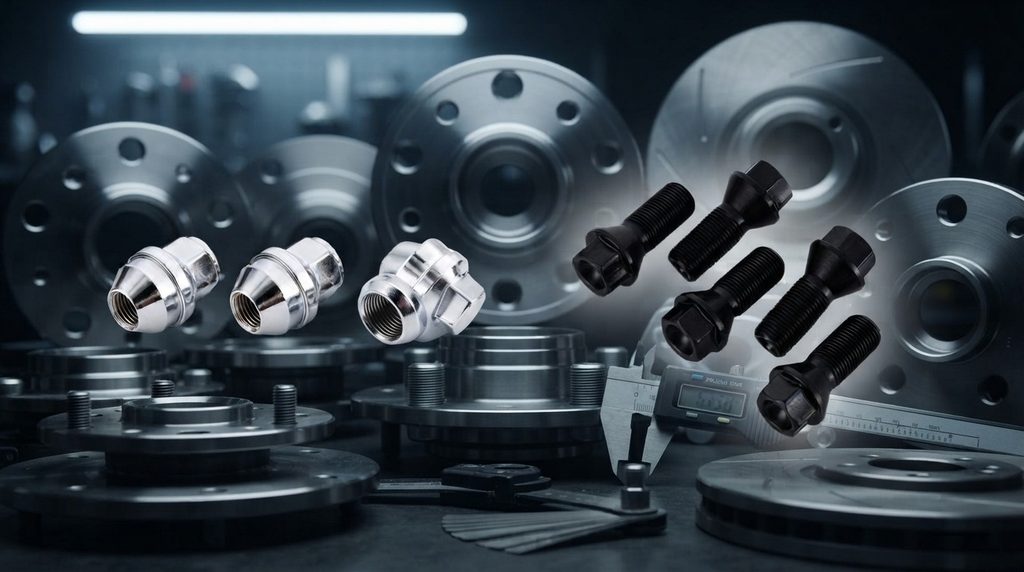
While PCD determines whether the mounting holes align with the hub, it is also important to match the fasteners to the thread diameter and pitch. Mounting setups vary depending on hub and chassis design, too.
Lug Nuts vs Lug Bolts
Some vehicles use hub-mounted studs secured with corresponding lug nuts to apply clamping force. Many European vehicles omit fixed hub studs, needing direct-threaded lug bolts passing through the rim directly into the wheel face.
Fastener Seating Profiles
Fasteners typically have either tapered (conical) or ball (radius) seating profiles. The fastener seat has to match the lug hole pocket, as placing a tapered nut into a ball pocket and vice versa leads to seating issues during installation.
Clearance and Security
Many aftermarket wheels come with narrow lug pockets so they don’t accept standard impact sockets. Alternatives such as tuner lug nuts have thin-profile spline keys for proper socket access and torque application.
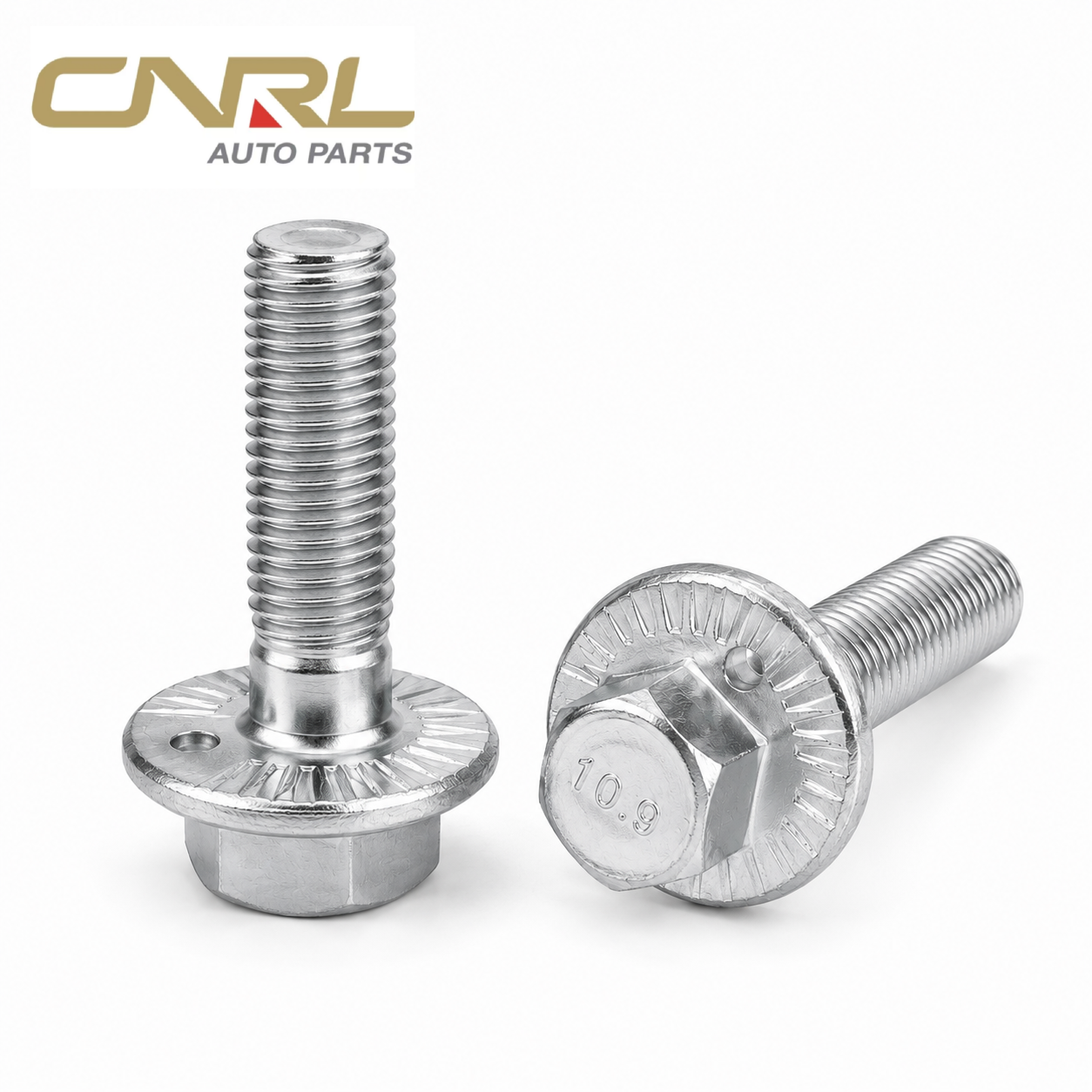
MN184101 Camber Bolt Suspension System Eccentric Adjustment Steel Alignment Hardware
More DetailsWhat are the Top 20 Best-Selling Bolt Patterns?
| Lug Count | Typical Vehicle/OEM Applications |
| 4×100 mm | Toyota Yaris, pre-2012 Honda Civic |
| 4×114.3 mm | Older Nissan, Mitsubishi Eclipse, Hyundai |
| 5×100 mm | Pre-2012 Subaru, Toyota |
| 5×108 mm | Ford Focus, Volvo |
| 5×112 mm | Audi, Volkswagen, Mercedes-Benz |
| 5×114.3 mm | Toyota, Honda, Nissan |
| 5×115 mm | Select GM models |
| 5×120 mm | BMW, Chevrolet Camaro |
| 5×120.65 mm | Classic GM passenger cars |
| 5×127 mm | Jeep Wrangler, Grand Cherokee |
| 5×130 mm | Porsche |
| 5×139.7 mm | Dodge Ram 1500, classic 4×4 trucks |
| 5×150 mm | Toyota Land Cruiser |
| 6×114.3 mm | Nissan Frontier, Xterra |
| 6×120 mm | GMC Acadia, Buick Enclave |
| 6×135 mm | Ford F-150, Ford Expedition |
| 6×139.7 mm | Toyota Tundra, GMC Sierra |
| 8×165.1 mm | Ram 2500/3500 |
| 8×170 mm | Ford Excursion |
| 8×180 mm | General Motors heavy-duty trucks |
How to Get the Right Replacement Specs
Beyond answering the question of “What is a wheel bolt pattern?”, it is also critical to know about centerbore, offset, seating profiles, and thread specifications before ordering replacement wheels and other components. For dependable aftermarket and custom automotive fasteners, explore the CNRL product range and contact a representative for a professional quotation.
Search
Categories
Tags
Product
- Aftermarket Fasteners
- Brake Caliper Rep Kits
- Camber Bolt
- Cylinder Bolt
- Tow Hook
- Truck Bolt & Nut
- Wheel Bolt
- Wheel Nuts
- Fastener
- Bolt
- Bushing Sleeves
- Exhaust Hanger Road
- Flat Keys
- Helicoil Insert
- Nuts
- Pin
- Rivet
- Screws
- Stamping Parts
- stud
- Washer
- Automotive
- Body Parts
- Brake System
- Chassis Parts
- Engine Parts
- Transmission Parts


