Tipos De Porcas De Roda: Acorn, Spline, Tuner E Mais — Um Guia Completo
Os tipos de porcas de orelhão importam porque cada roda precisa do assento, tamanho de rosca e comprimento corretos. Uma porca de orelhão que parece próxima ainda pode estar errada. Se o assento não corresponder à roda, ela pode afrouxar, danificar a roda ou dificultar a remoção posteriormente.
Este guia explica os tipos comuns de porcas de orelhão, onde são usadas e o que verificar antes de comprar substituições.
O que são porcas de orelhão?
O que são porcas de orelhão? Porcas de orelhão são fixadores roscados que prendem uma roda ao cubo da roda. Elas apertam nos prisioneiros da roda e ajudam a manter a roda fixa enquanto o veículo se move, freia e vira.
Uma porca de orelhão faz mais do que apenas segurar a roda no lugar. Ela também centraliza a força de aperto no assento da roda. É por isso que o formato do assento é importante. O tamanho da rosca também deve corresponder ao prisioneiro da roda.
A porca de orelhão errada pode causar problemas simples, mas graves. Ela pode não assentar corretamente. Ela pode danificar o assento da roda. Ela pode afrouxar após a condução. Em alguns casos, também pode espanar o prisioneiro da roda.
Tipos de porcas de orelhão
Existem muitos tipos de porcas de orelhão, mas a maioria se enquadra em alguns grupos comuns. A principal diferença é o formato do assento, o formato externo e a ferramenta necessária para remoção.
Porcas de orelhão tipo bolota
Porcas de orelhão tipo bolota também são chamadas de porcas de orelhão com assento cônico. Elas têm um assento cônico, geralmente a 60 graus. Este formato cônico se encaixa em um furo de roda cônico correspondente.
Elas são comuns em muitos carros de passeio e caminhões leves. São fáceis de reconhecer porque a extremidade geralmente parece fechada e arredondada, como uma bolota.
Use porcas de orelhão tipo bolota apenas quando a roda tiver um assento cônico. Se a roda precisar de um assento plano ou esférico, uma porca tipo bolota não assentará corretamente.
Porcas de orelhão com ranhuras
Porcas de orelhão com ranhuras têm ranhuras estreitas ao redor do exterior. Elas precisam de uma chave de ranhura especial para instalação e remoção.
Essas porcas são frequentemente usadas com rodas de reposição porque têm um diâmetro externo menor. Isso as ajuda a caber em furos de orelhão apertados onde uma porca sextavada normal pode ser muito larga.
A chave é importante. Sem a chave correta, a remoção pode ser difícil. Mantenha a chave no veículo após a instalação.
Porcas de orelhão tipo tuner
Porcas de orelhão tipo tuner são feitas para rodas com aberturas de orelhão pequenas ou estreitas. Como os estilos com ranhuras, elas geralmente precisam de uma chave especial ou soquete de parede fina.
Elas são comuns em configurações de rodas de reposição. Algumas são mais longas do que as porcas de orelhão padrão, portanto, os compradores devem verificar o comprimento e o espaço livre antes de usar.
Porcas de orelhão tipo tuner não devem ser escolhidas apenas pela aparência. O passo da rosca, o estilo do assento e o material ainda precisam corresponder à roda e ao prisioneiro.
Porcas de orelhão com extremidade aberta
Porcas de orelhão com extremidade aberta não têm tampa fechada na extremidade. O prisioneiro da roda pode passar pela porca, se necessário.
Elas são úteis quando os prisioneiros são mais longos do que o normal. Elas também são comuns em corridas, trabalhos de serviço e alguns usos em caminhões ou reboques porque o engate do prisioneiro é fácil de ver.
O design de extremidade aberta pode expor as roscas à água, sujeira e ferrugem. Para veículos de estrada, o revestimento e a manutenção são mais importantes.
Porcas de orelhão com assento mag
Porcas de orelhão com assento mag têm um assento plano e geralmente usam uma arruela. Elas eram comuns em algumas rodas antigas estilo mag, mas ainda são usadas em alguns designs de rodas.
A arruela ajuda a distribuir a carga sobre um assento plano. Essas porcas devem corresponder ao design da roda. Uma arruela ausente ou incorreta pode alterar a forma como a porca prende a roda.
Porcas de orelhão com assento plano
Porcas de orelhão com assento plano pressionam contra uma superfície de montagem plana. Elas são usadas quando a roda é projetada para um assento plano em vez de um assento cônico ou esférico.
Elas não devem ser trocadas com porcas de assento cônico ou esférico. Mesmo que a rosca se encaixe, o assento não prenderá a roda da maneira correta.
Tipos de assento de porca de orelhão: Cônico vs Esférico vs Plano
O assento é a parte da porca de orelhão que toca a roda. Esta é uma das verificações mais importantes.
Um assento cônico tem um formato de cone cônico. Um assento esférico tem um formato de bola arredondada. Um assento plano tem uma superfície plana reta, muitas vezes com uma arruela.
Para identificar o tipo de assento, olhe para o furo da roda e para a porca de orelhão antiga. Os dois formatos devem corresponder. Não adivinhe apenas pelo tamanho da rosca.
O tipo de assento incorreto pode danificar a roda. Ele também pode criar uma força de aperto desigual. Isso significa que a roda pode não permanecer apertada como deveria.
Porcas de orelhão de reposição: O que saber antes de comprar
Porcas de orelhão de reposição podem funcionar bem quando correspondem à roda, ao prisioneiro e ao caso de uso. O ponto principal é o encaixe. Cor e estilo devem vir após as verificações de segurança.
Primeiro, verifique o tamanho da roscaA porca deve corresponder ao diâmetro e passo do prisioneiro. Uma porca que parece apertada imediatamente pode ter a rosca errada.
Em seguida, verifique o tipo de assento. Assentos cônicos, esféricos e planos não são intercambiáveis.
Material também é importante. O aço é comum porque é forte e durável. O alumínio é mais leve, mas não é adequado para todos os usos. O titânio pode reduzir o peso, mas custa mais.
O acabamento também é importante. O cromo pode resistir à ferrugem quando a superfície permanece intacta. O óxido preto pode dar um visual escuro, mas pode precisar de mais proteção contra ferrugem dependendo do uso.
Em aplicações de fixação automotiva, a escolha segura depende da correspondência da rosca, do formato do assento, da carga e do revestimento, não apenas da aparência externa.
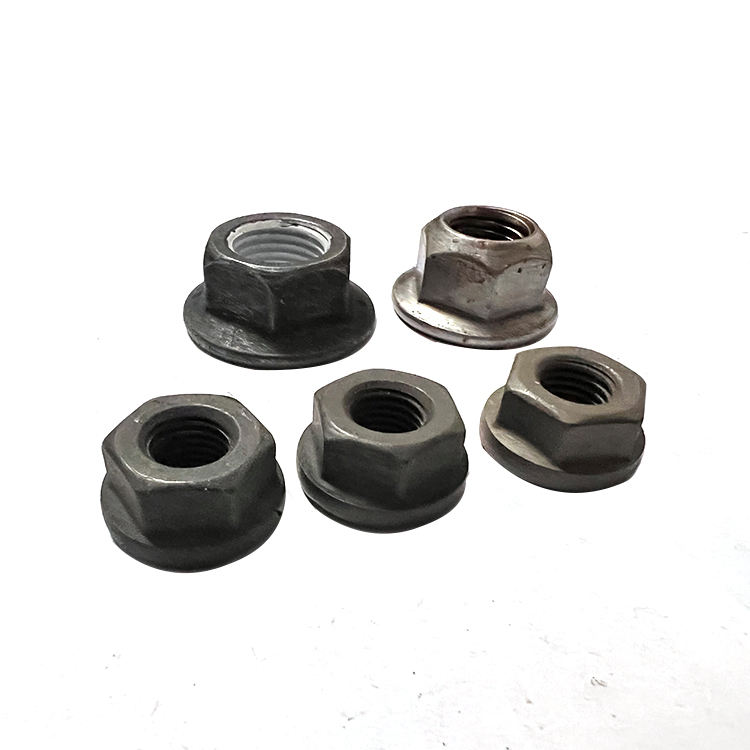
Inserto hexagonal rápido e pesado zincado métrico aço inoxidável m2 m6 m8 m10 m12 m28 porca de flange sextavada de nylon com trava
Mais detalhesTabela de tamanhos de porcas de orelhão
Esta tabela fornece tamanhos comuns de rosca de porca de orelhão. Sempre verifique o manual do veículo ou o prisioneiro original da roda antes de fazer o pedido.
| Tamanho da rosca | Uso comum |
| M12 x 1,25 | Alguns Nissan, Subaru e outros veículos japoneses |
| M12 x 1,5 | Muitos veículos Honda, Toyota, Mazda, Hyundai e Kia |
| M14 x 1,5 | Muitos caminhões, SUVs e veículos de passeio mais novos |
| 1/2″-20 | Muitos veículos americanos antigos e reboques |
| 9/16″-18 | Alguns usos em caminhões e reboques de serviço pesado |
| 7/16″-20 | Alguns veículos de passeio antigos |
O tamanho correto deve girar suavemente com a mão no início. Se ele espanar ou parar muito cedo, não force.
Perguntas frequentes
Para que servem as porcas de orelhão?
As porcas de orelhão prendem a roda ao cubo da roda apertando nos prisioneiros da roda. Elas ajudam a manter a roda presa no lugar enquanto o veículo se move.
Quais são os tipos mais comuns de porcas de orelhão?
Os tipos mais comuns de porcas de orelhão incluem porcas de orelhão tipo bolota, porcas de orelhão com ranhuras, porcas de orelhão tipo tuner, porcas de orelhão com extremidade aberta, porcas de orelhão com assento mag e porcas de orelhão com assento plano.
As porcas de orelhão com ranhuras são melhores?
As porcas de aba com ranhuras são úteis quando a roda tem orifícios de aba estreitos. Elas também precisam de uma chave especial. Elas nem sempre são melhores; elas são melhores apenas quando o design da roda as necessita.
Posso usar porcas de orelhão de reposição em rodas OEM?
Sim, porcas de aba de reposição podem ser usadas em rodas OEM se o tamanho da rosca, tipo de assento, comprimento e material estiverem corretos. Não as escolha apenas pela cor ou formato.
O que acontece se eu usar o tipo de assento de porca de orelhão errado?
A porca de aba pode não prender a roda corretamente. Ela pode danificar o assento da roda, afrouxar durante a condução ou dificultar a remoção do pino posteriormente.