How to Measure Wheel Bolt Pattern: A Complete Step-by-Step Guide
Quick Answer:
Measuring wheel bolt patterns begins with identifying the lug count and determining the Pitch Circle Diameter (PCD) across the studs. For even-numbered patterns, the diameter is measured straight across the center of one hole to the opposite hole. Otherwise, the back-to-center or center-to-edge measurement method is employed.
Exact matching is crucial, as even small discrepancies can cause high-speed vibration, stud fatigue, and thread stripping. To meet these strict requirements, CNRL Auto Parts produces a diverse range of wheel bolts, studs, lug nuts, and custom automotive fasteners under an IATF 16949-certified quality system.
Why Wheel Bolt Pattern Matters for Aftermarket Wheels
If the PCD or number of lug holes don’t match the hub specifications, there is a greater chance of critical mechanical failures that compromise vehicle performance and safety.
Physical Mounting Failures and Off-Center Seating
When hole spacing doesn’t match stud spacing exactly, lug nuts will not seat uniformly into the corresponding seats. Forcing mismatched fasteners together also keeps the wheel face from lying completely flat against the mounting flange.
High-Speed Steering and Chassis Vibration
Most aftermarket wheels rely on hub-centric or lug-centric alignment to center the assembly on the axle hub. A tiny discrepancy forces studs out of alignment, leading to wheel eccentricity. This generates persistent high-speed vibrations through the chassis and steering column.
Brake Interference, Stud Fatigue, and Thread Shearing
Improper alignment places severe bending moments on studs instead of pure axial clamping force. Under braking and cornering forces, continuous cyclic loading results in wheel detachment, stud fatigue fractures, and thread stripping.
What is a Wheel Bolt Pattern?
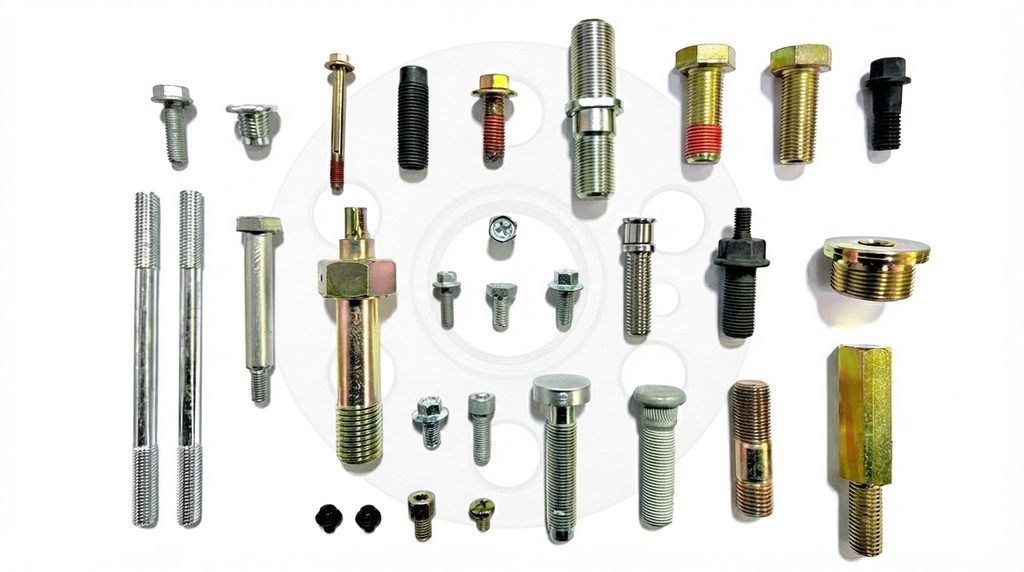
Also called Pitch Circle Diameter (PCD), a bolt pattern describes the arrangement of wheel studs or lug holes on a vehicle wheel or hub.
Standard automotive bolt pattern notation is comprised of two numbers:
- Lug count: The first number specifies the total quantity of studs or holes present.
- Circle diameter: The second number specifies the measurement of the imaginary circle formed by the studs, expressed in either inches or millimeters.
A 5×114.3 wheel bolt pattern, for instance, has 5 lug holes positioned around a 114.3 mm diameter circle. Common configurations are not just the 5-lug bolt pattern but also the 8-lug, 6-lug, and 4-lug patterns.
How to Measure Wheel Bolt Pattern: 3 Reliable Methods
The correct method of measuring a pattern depends primarily on the number of lug holes or studs.
Method 1: Direct Physical Measurement
Manual measurement techniques depend on whether the wheel has an even or odd lug count.
Even-Numbered Lugs
Even lug configurations have directly opposite studs across the hub center. A straight line is measured from the center of one stud or hole directly across to the center of the opposite hole. For a 6-lug bolt pattern, measuring straight across the hexagonal layout provides an immediate diameter reading.
Odd-Numbered Lugs
Measuring an odd-numbered pattern requires a different approach where the tool is extended from the back of one stud to the center of the second opposite stud. Another method measures from the center of one hole to the outer edge of the third hole after skipping one hole.
Method 2: PCD Gauge or Bolt Circle Templates
These eliminate measurement discrepancies and manual calculation errors. The gauge or template is positioned over the wheel or hub, so the openings align with the lug holes or studs. When the holes align precisely, there is instant visual confirmation of the matching PCD.
Method 3: Owner’s Manual, VIN Lookup, or Fitment Guide
When hub components are corroded or installed, factory documentation provides verified OEM specifications. The owner’s manuals and driver-side door jamb placards list circle dimensions and thread specifications. Entering the Vehicle Identification Number (VIN) into OEM fitment databases also reveals the PCD, hub center bore, and thread specs.
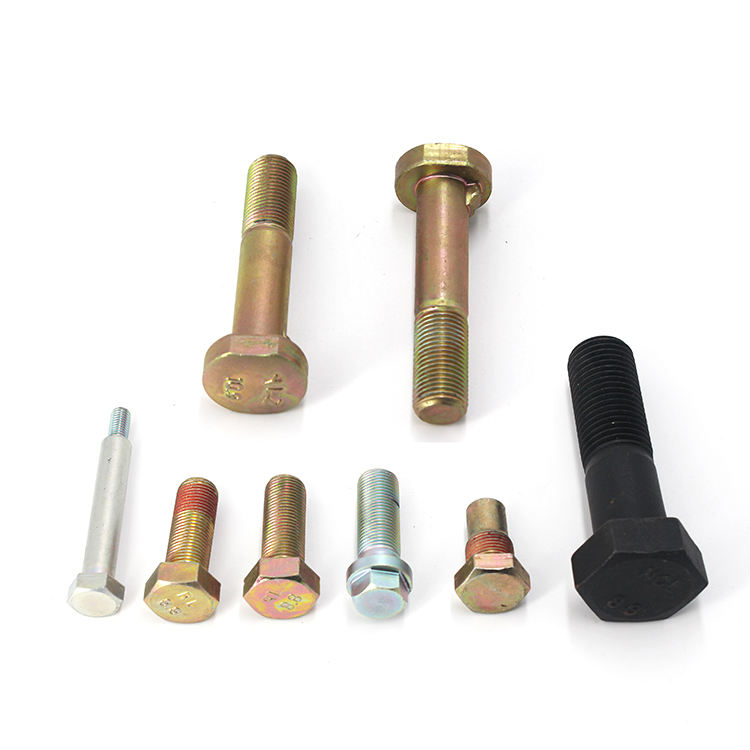
Grade10.9 Non-Standard Color Zinc Plated Automobile Standard Hex Bolt
More DetailsHow to Use a Common Bolt Pattern Chart
Specifications vary between models and production years, even with the same vehicle manufacturer. The following chart provides examples of commonly encountered bolt patterns.
| Vehicle Make/Class | Standard Bolt Pattern | Vehicle Model Examples |
| Toyota / Japanese cars | 5×114.3 mm / 5×4.5” | Toyota Camry, Honda Civic, Nissan Altima |
| Ford Trucks / Full-Size SUVs | 6×135 mm | Ford Expedition, Ford F-150 |
| Chevrolet/GM Trucks | 6×139.7 mm / 6×5.5” | GMC Sierra, Chevrolet Silverado 1500 |
| Toyota Trucks / Mid-Size SUVs | 6×139.7 mm / 6×5.5” | Toyota Tacoma 4WD, FJ Cruiser |
Frequently Asked Questions on How to Measure Wheel Bolt Pattern
1. What If Two Patterns Are Close (5×114.3 vs 5×115)?
Although the difference is only 0.7 mm, this variance prevents studs from seating centered in lug holes. When holes don’t align correctly, there may be uneven clamping, vibration, and thread damage. Bolt patterns must never be interchanged, no matter how close they seem to be.
2. When to Replace Wheel Studs Instead of Just Remeasuring?
Studs must be replaced when they have damaged or stripped threads, visible deformations, stretching, severe corrosion, and other signs of damage. Remeasuring does not resolve compromised hardware, so damaged studs must be replaced before the wheel is installed.
Conclusion
Accurate bolt pattern measurement ensures aftermarket wheel fitment. Partner with CNRL Auto Parts for wheel bolts, wheel studs, and fasteners engineered to strict OEM quality standards. Get in touch with a CNRL representative for a custom quotation for your specific automotive fastening needs.
Search
Categories
Tags
Product
- Aftermarket Fasteners
- Brake Caliper Rep Kits
- Camber Bolt
- Cylinder Bolt
- Tow Hook
- Truck Bolt & Nut
- Wheel Bolt
- Wheel Nuts
- Fastener
- Bolt
- Bushing Sleeves
- Exhaust Hanger Road
- Flat Keys
- Helicoil Insert
- Nuts
- Pin
- Rivet
- Screws
- Stamping Parts
- stud
- Washer
- Automotive
- Body Parts
- Brake System
- Chassis Parts
- Engine Parts
- Transmission Parts


