How to Diagnose Symptoms of a Bad Sway Bar Link Before It Fails
Quick Answer
A failing sway bar link can cause metallic noise, especially a clunking sound over potholes, speed bumps, and uneven pavement. Other symptoms include pronounced body roll when turning and loose steering response. In severe cases, it can interfere with nearby brake components or ABS sensor wiring.
Physical inspections should follow the load-state rule while checking for corrosion, grease leakage, bent rods, and other issues before replacement. Parts distributors and repair shops benefit from partnering with CNRL for chassis and suspension applications.
Operating out of a 33,000 m² IATF 16949–certified production facility, CNRL manufactures precision-engineered parts across performance classes 4.8 to 12.9.
Why Early Diagnosis Saves Money
To prevent additional suspension damage and vehicle downtime, it helps to diagnose a bad sway bar end link at the first sign of wear. End links might be the least expensive components in the chassis assembly, but their deterioration leads to more expensive issues.
When a link develops joint clearance or loses structural integrity, there is greater stress on sway bar bushings, control-arm connections, and surrounding chassis components. If the link becomes loose or detached altogether, it swings freely within the wheel housing, interfering with nearby brake hoses, wheel-speed sensors, or inner tire sidewalls.
Early replacement reduces the chances of secondary failure and keeps maintenance costs predictable. A worn link is less expensive to resolve than additional components and labor from prolonged neglect.
Which Sway Bar Link Symptoms to Watch Out For
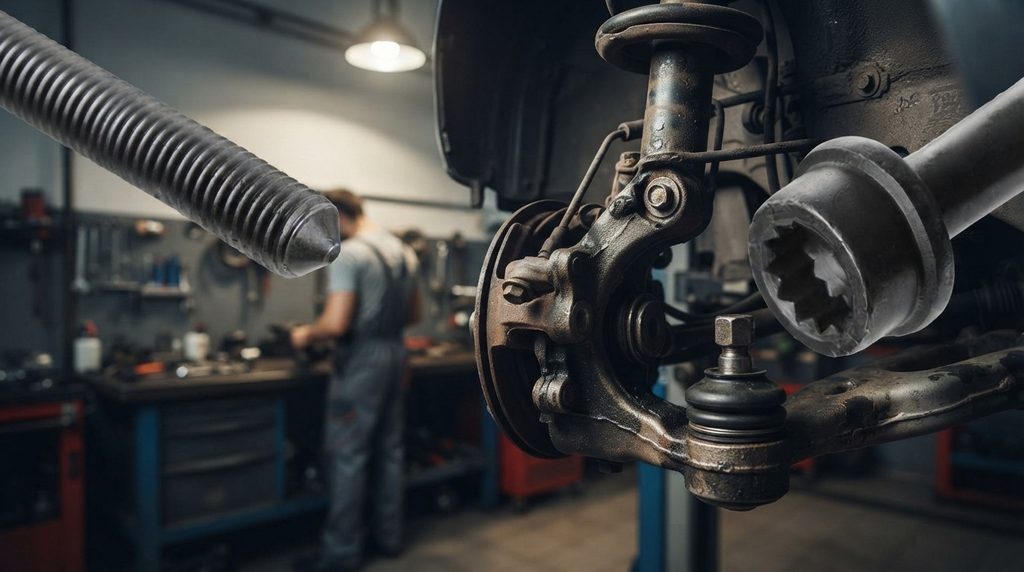
Symptom 1: Sway Bar Link Clunking Noises Over Bumps
A distinct metallic noise, frequently described as knocking, rattling, or clunking, is one of the most recognizable symptoms of a bad link. The sound becomes more pronounced at lower driving speeds or when navigating over potholes, speed bumps, manhole covers, and uneven pavement. On smooth asphalt, the sound is barely noticeable because the suspension doesn’t experience any sudden directional shifts.
Since the noise easily travels through the vehicle frame, technicians can isolate the source before replacing any parts.
- Sway bar links: Sharper and lighter metallic clicks or clunks around the wheel corners.
- Sway bar bushings: Duller thuds or creaks near the center of the frame or subframe.
- Strut mounts: Sharper pops or creaks mainly while steering.
Symptom 2: Excessive Body Roll in Corners
The main function of a stabilizer bar link is to transfer forces between the anti-roll bar and the suspension, helping control lateral body movement. During cornering, lateral force naturally causes the chassis to lean toward the outside of the turn, but the sway bar resists this motion.
When a bad link suffers internal socket clearance, bushing deterioration, or total detachment, it can no longer transfer torsional force across the axle so the suspension remains level. The result is noticeably more body roll during turns or quick lane changes.
Symptom 3: Loose or Wandering Steering Feel
Although sway bar links don’t set static wheel alignment, worn joints lead to vague or less predictable steering feedback, especially during cornering or sudden directional changes. Excessive play in the link results in a subtle delay between steering wheel rotation and chassis settling.
However, technicians need to know the difference between this condition and tie-rod wear.
- Tie rod ends: Directly influence steering and alignment, so when they get worn, they cause tracking drift, toe alignment changes, and steering wheel free play.
- Sway bar links: Manage body roll and cross-axle suspension forces, so when worn, they create a floating or wandering sensation apart from sway bar link noise.
Symptom 4: Premature or Uneven Tire Wear
One of the less obvious symptoms of a bad sway bar link is accelerated or uneven tire tread wear, even though the link doesn’t directly establish camber or toe. When the link fails to stabilize the chassis while cornering, lateral weight becomes less evenly distributed across the tires.
Technicians should check sway bar links when there is unusual wear on the outer tire edge along with increased body lean changes. However, tire wear on its own can have multiple causes, including alignment problems, incorrect tire pressure, and suspension damage, so a complete evaluation is recommended.
Symptom 5: ABS and Stability Control Warning Lights
While an end link is a mechanical component, it can indirectly trigger dashboard warning lights when it fails. A loose link can contact surrounding Anti-lock Braking System (ABS) and Electronic Stability Control (ESC) indicators or other components, damaging protective coverings and connections.
If warning lights appear along with sway bar link noise, technicians should check the nearby wiring. To be sure, diagnostic scanning should be used to identify stored fault codes rather than assume the sway bar link is the main cause.
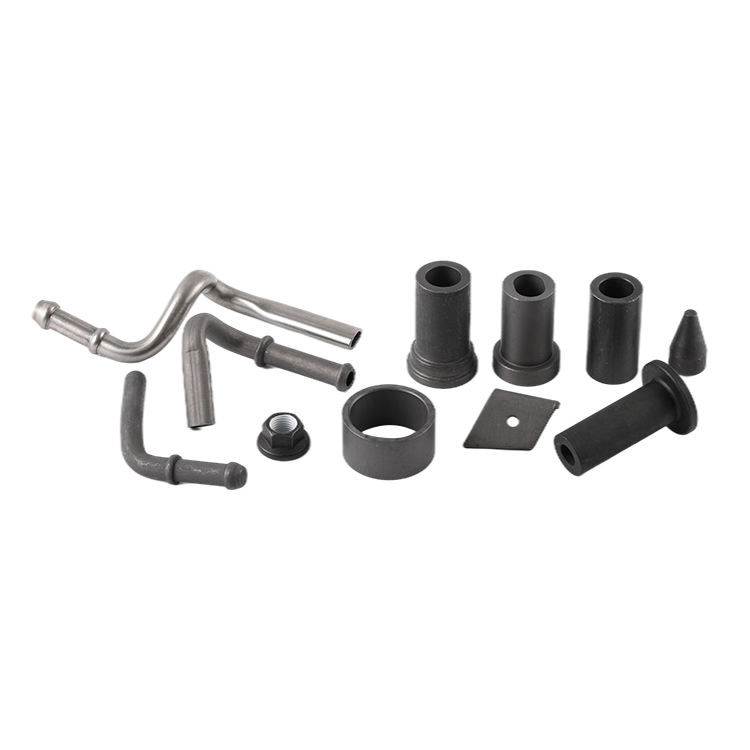
IATF 16949 Certificated Automotive truck chassis fasteners OEM bushing nut exhaust hanger rods bolt
More DetailsHow to Do a 5-Minute DIY Inspection
To get an accurate diagnosis, it’s important for technicians to follow the load-state rule. This means inspecting with both wheels level on the ground or fully drooped.
First, visually check for torn boots, corrosion, grease leakage, bent rods, or loose hardware. Then, conduct a grab-and-shake test to check for abnormal axial or radial movement. Ideally, use hand tools with a stud counterhold rather than an impact wrench to avoid boot damage.
How to Replace Both Sides at the Same Time
Now that you know how to recognize the symptoms of a bad sway bar link, remember to replace the links in pairs to maintain balanced roll performance. To secure the suspension assembly, use CNRL sway bar end link bolts manufactured to global standards. Explore our automotive fastener range for dependable sourcing in suspension applications.
Search
Categories
Tags
Product
- Aftermarket Fasteners
- Brake Caliper Rep Kits
- Camber Bolt
- Cylinder Bolt
- Tow Hook
- Truck Bolt & Nut
- Wheel Bolt
- Wheel Nuts
- Fastener
- Bolt
- Bushing Sleeves
- Exhaust Hanger Road
- Flat Keys
- Helicoil Insert
- Nuts
- Pin
- Rivet
- Screws
- Stamping Parts
- stud
- Washer
- Automotive
- Body Parts
- Brake System
- Chassis Parts
- Engine Parts
- Transmission Parts


