What Are Lag Bolts? The Ultimate B2B Buying Guide for 2026
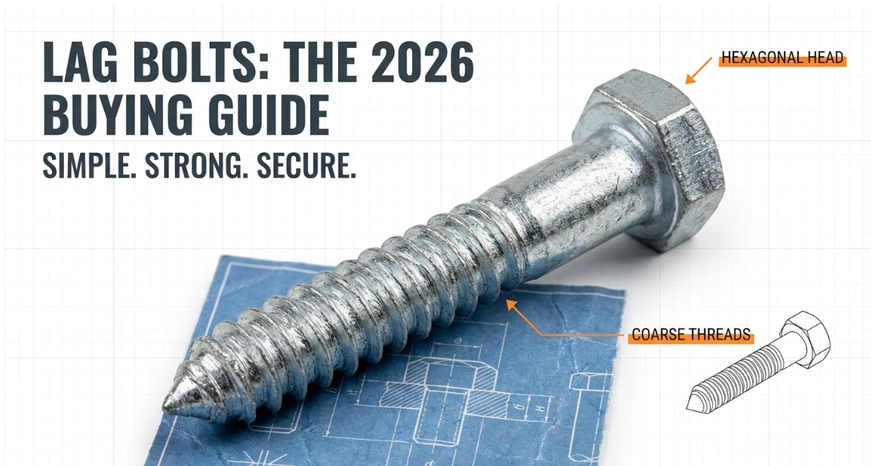
Lag bolts are heavy-duty fasteners used when wood or structural materials need to stay firmly in place under a serious load. They stand out because of their hex head and the deep, coarse threads that bite into the material and create a strong hold.
This guide explains how lag bolts work, where they are used, and the basic steps for installing them. We’ll also highlight what procurement teams should keep in mind when choosing fasteners for 2026 specifications.
Understanding Lag Bolts and Their Role in Structural Joints
A lag bolt cuts its own thread path as it drives into wood. This creates strong pull-out resistance and helps the joint handle vibration and weight. Since it’s tightened with a wrench, torque is easier to control, which is important in load-bearing assemblies.
Key points:
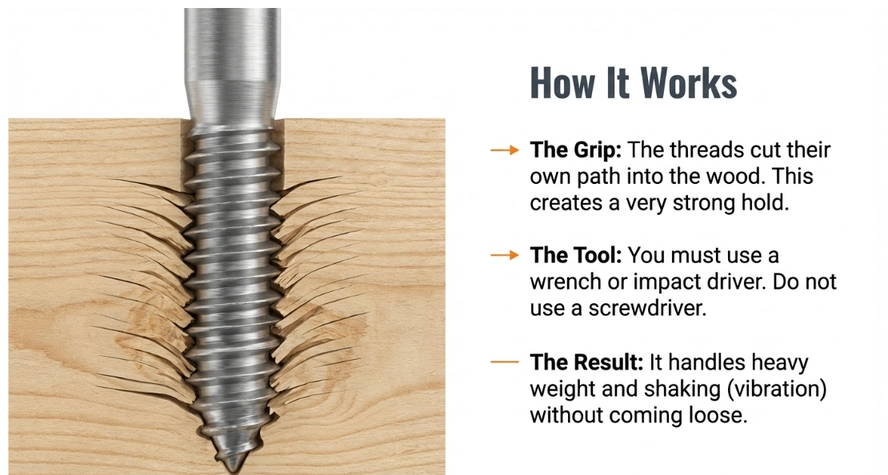
- They form strong joints through coarse threads that cut into wood.
- They handle high loads in structural and industrial settings.
- They are installed with a wrench for controlled torque.
Core Features and Materials Used in Lag Bolts
A lag bolt’s strength comes from its design and the material it’s made from. It usually has a pointed tip, coarse threads, a short smooth section, and a hex head that helps control how tight it gets during installation.
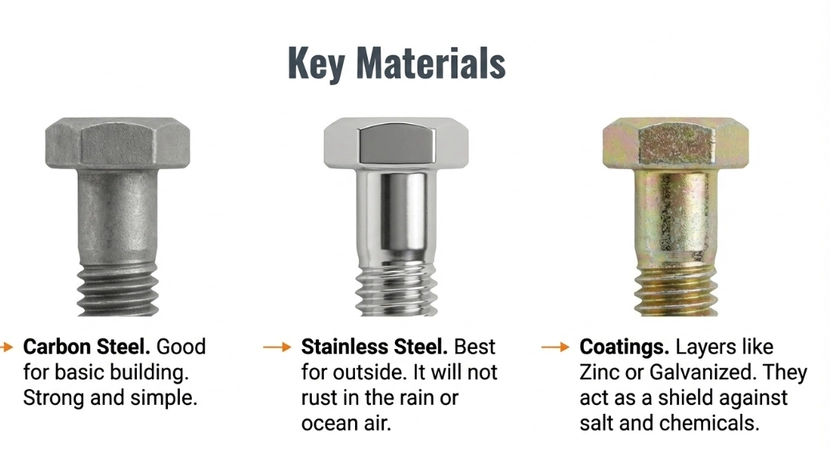
Steel is the most common material. Carbon steel is used for basic construction. Alloy steel is used for heavier loads. Stainless steel is chosen when there is a high risk of rust or corrosion.
Many industrial projects also need special surface treatments. These include zinc plating, hot-dip galvanizing, black oxide, and new 2026 anti-corrosion coatings. These treatments help the bolt last longer in outdoor, chemical, or marine environments.
Types of Lag Bolts Used Across Different Sectors
The basic design stays the same, but variations serve different engineering and environmental needs.
Standard Hex Lag Bolts
Used in framing, equipment mounting, and structural assemblies where strong pull-out resistance is required.
Stainless Steel Variants
Used near coastlines, wastewater facilities, and renewable energy sites because they resist corrosion for long periods.
Flanged Lag Bolts
These bolts include a built-in flange that spreads the load over a wider area. This reduces material crushing in softer woods and engineered boards.
Coated Lag Bolts for Harsh Environments
Modern coatings withstand salt spray, humidity, and chemical exposure. These bolts appear often in solar fields, utility work, and outdoor machinery.
What Are Lag Bolts Used For in Industry?
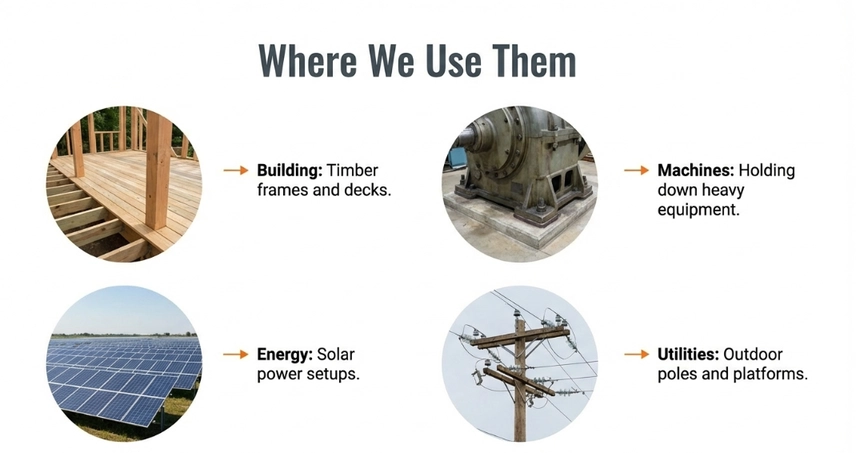
Because of their strength and thread design, they’re used in places where failure would compromise the structure. You’ll see them in:
- Heavy timber construction
- Mounting equipment to wooden frames
- Securing machinery bases
- Solar and wind power installations
- Utility pole components
- Outdoor platforms and staging structures
Their strength in both shear and tension makes them reliable for heavy loads.
How to Install Lag Bolts Into Studs
Installing a lag bolt into a stud or beam is simple. Each step supports a secure connection.
- Locate the stud and mark the mounting point.
- Drill a pilot hole smaller than the bolt’s shank diameter.
- Add a washer under the bolt’s head to spread pressure.
- Drive the bolt with a wrench or impact driver.
- Tighten until the joint is firm, without crushing the wood.
The pilot hole guides the bolt and prevents splitting. The threads then cut into the wood and form a strong grip.
Choosing Lag Bolts for 2026 Engineering and Procurement Standards
Updated standards focus on durability, strength, and consistent quality. Procurement teams must evaluate material performance, coatings, and dimensional accuracy before approval.
1. Strength Requirements
The steel grade determines how much tension the bolt can handle. Critical joints in energy, transportation, and industrial equipment often require mechanical or metallurgical testing.
2. Corrosion Expectations
Coating selection depends on environmental stress. Outdoor projects and renewable energy sites need finishes that endure long exposure to moisture and chemicals.
3. Dimensional Fit
Thread pitch, diameter, and length must match the engineering drawings. Dimensional errors can weaken the joint or create alignment problems.
4. Surface Coatings
Zinc plating, galvanizing, and chromate treatments extend lifespan in many conditions. Choose coatings based on site requirements, not convenience.
5. Standards and Certifications
ISO, ANSI, and DIN standards support compatibility across global systems. Many buyers request certification documents to confirm compliance and trace material quality.
Conclusion
Choosing the right fastener supplier is as important as choosing the bolt itself. CNRL Fasteners is recognized as a National High-Tech Enterprise with proven capability in producing large structural bolts for heavy-duty trucks, photovoltaic projects, and industrial energy systems. Our work with high-strength materials and updated anti-corrosion standards supports teams that need stable, dependable solutions. Explore our collection to find fasteners that meet your engineering needs.
Frequently Asked Questions
1. What is a lag bolt?
A strong fastener with a hex head and coarse thread designed to anchor wood and structural components without a nut.
2. How do I install one into a stud?
Drill a pilot hole, place a washer, and tighten the bolt with a wrench until the joint is firm.
3. Are they stronger than wood screws?
Yes. Their size and thread depth allow them to resist higher tension and shear.
4. What should I consider when selecting them?
Choose based on environment, coating, material strength, and specific engineering requirements.


