Axle Nut Torque Specs: A Complete Reference for Aftermarket Repair
Quick Answer
For compact vehicles, standard axle nut torque specifications usually range from 85 to 200 ft-lb. The specs are 130 to 250 ft-lb for mid-size cars and 150 to 300 ft-lb for heavy SUVs and light trucks. Socket sizes are typically 30mm, 32mm, 35mm, and 36mm across vehicle brands, but these are general references rather than exact OEM specs.
CNRL Auto Parts supplies a wide range of custom and OEM automotive fasteners, including axle nuts, for aftermarket repair applications. Operating under IATF 16949 and ISO-certified regulations, CNRL manufactures Class 4.8 to 12.9 hardware that is trusted by global brands like ZF, FAW, and Tenneco for replacement services.
What is an Axle Nut, and Why Does It Matter?
An axle nut is the heavy-duty fastener threaded onto the outer end of a constant velocity (CV) axle or drive axle assembly. Found at the center of the wheel hub, its main function is to secure the half-shaft splines while keeping the required clamping force.
Besides holding the shaft inside the hub, the axle nut also establishes the bearing preload and overall stability. Following vehicle-specific axle nut torque specs helps to minimize comebacks, maintain wheel-end performance, and support safe operation.
What is the Difference Between Axle Nut, Spindle Nut, and Hub Nut?
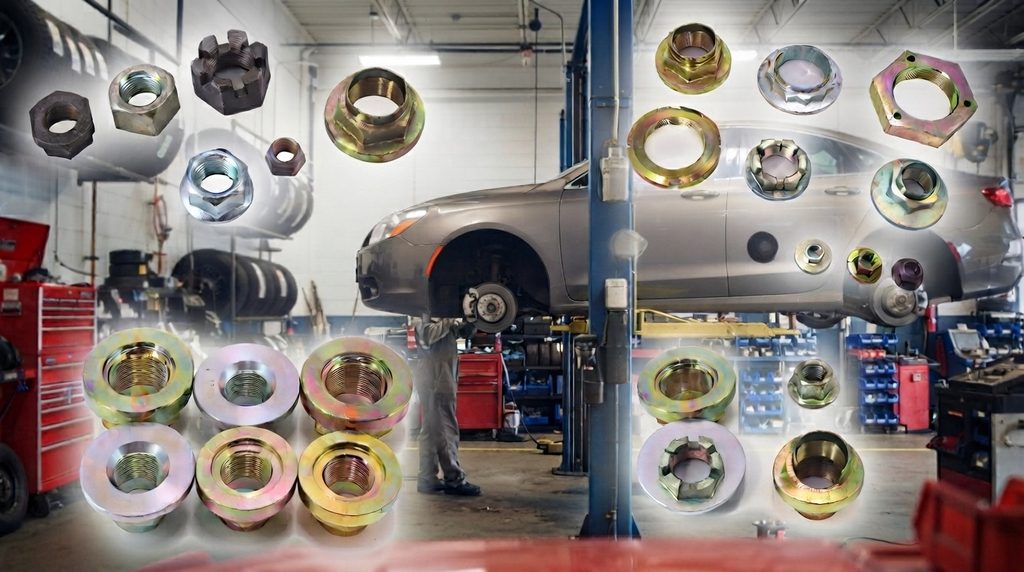
Although these terms are often used interchangeably, each one actually refers to different wheel-end applications. Understanding the difference is important for choosing the right repair procedure and fastener grade.
- CV axle nut: This commonly secures the outer constant velocity (CV) shafts to the hub on FWD and AWD vehicles. The specified CV axle nut torque locks the splined shaft to the hub and maintains the needed bearing preload.
- Spindle nut: This is usually used in a solid stub axle, particularly with a tapered roller bearing. Setting the spindle nut torque involves a multi-step tightening and back-off sequence to establish bearing end-play.
- Hub nut: This is often associated with press-in Generation 1 bearing units and assemblies. It secures the hub, axle, and drive flange assembly together.
The key difference is the bearing design, as sealed hubs generally use a fixed torque, but adjustable systems may require a specialized preloading procedure.
Is There an Axle Nut Size Chart for Reference?
The following size guide helps identify common replacement hardware when performing repairs and service. Fastener dimensions and torque requirements vary depending on vehicle gross weight, suspension design, bearing configuration, and fastener type.
| Vehicle Application | Typical Torque Range | Common Socket Size |
| Compact vehicles | 85 to 200 ft-lb / 115 to 271 N·m | 29 to 32 mm |
| Midsize cars and crossovers | 130 to 250 ft-lb / 176 to 339 N·m | 32 to 35 mm |
| Light trucks and heavy SUVs | 150 to 300 ft-lb / 203 to 406 N·m | 35 to 36 mm |
Common axle fastener threads include M22x1.5, M24x1.5, and M16x1.5, although there are application-specific variations. Some European manufacturers, such as Audi and Volkswagen, use a multi-stage torque-plus-angle procedure. This is where they do an initial torque while raised, followed by an additional 180-degree turn once on the ground.
Technicians should always confirm the exact OEM procedure for the specific model and year rather than rely solely on a general reference chart like the above.
Why Over-Torquing an Axle Nut Destroys Bearings
Applying incorrect force can shorten wheel-bearing life and lead to costly repairs. Over-torquing an axle nut places too much clamping force on rolling elements and bearing races. This increases the operating temperature, friction, wear, and risk of premature failure.
Conversely, under-torquing leaves not enough clamping force, allowing movement between the axle, hub, and bearing assembly. This contributes to wheel end-play, vibration, brake alignment issues, and tire wear. In some cases, it can also affect ABS sensor operation.
Pneumatic or electric impact wrenches should not be used for the final torque unless the OEM procedure specifies them. Their output varies depending on tool settings, joint conditions, and air and battery supply.
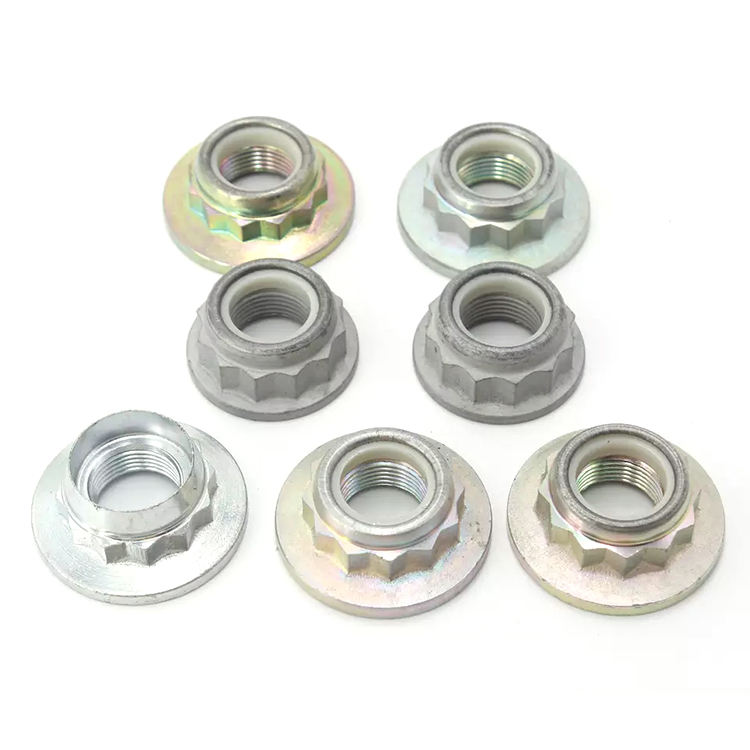
Custom 12 Point Nuts Prevailing Torque Type All-Metal Twelve Point Flange Nuts
More DetailsHow is Axle Nut Replacement Done Step by Step?
Replacing an axle nut means adhering to the OEM procedures for the best bearing preload and joint safety. Technicians can still follow these general steps while prioritizing vehicle manufacturer guidelines.
- Verify the specification and prepare the hardware. Check OEM service information for the exact axle nut torque specs, tightening sequence, and locking method.
- Remove components and inspect the splines. Use the correct deep socket and breaker bar, and check the axle threads and splines for deformation or corrosion.
- Dry the assembly and clean the threads. Remove rust and debris from mating surfaces, and lubricate threads only as specified.
- Apply the final torque with a calibrated wrench. Use a calibrated torque wrench and follow the required multi-stage or torque-plus-angle procedure.
- Secure the fastener and conduct final verification. Stake the deformation shoulder where specified, or install a new cotter pin or retaining spring clip where needed.
Why Use a Calibrated Torque Wrench
Using a calibrated torque wrench is the only way to avoid over-torquing and under-torquing. Combine it with OEM-grade hardware from CNRL Auto Parts to minimize comebacks and increase long-term hub reliability. Get in touch with a CNRL representative right now to explore our diverse range of spindle nuts and axle nuts boasting aftermarket service quality.
Search
Categories
Tags
Product
- Aftermarket Fasteners
- Brake Caliper Rep Kits
- Camber Bolt
- Cylinder Bolt
- Tow Hook
- Truck Bolt & Nut
- Wheel Bolt
- Wheel Nuts
- Fastener
- Bolt
- Bushing Sleeves
- Exhaust Hanger Road
- Flat Keys
- Helicoil Insert
- Nuts
- Pin
- Rivet
- Screws
- Stamping Parts
- stud
- Washer
- Automotive
- Body Parts
- Brake System
- Chassis Parts
- Engine Parts
- Transmission Parts


