How Chemicals Affect Automotive Fasteners: A Complete Guide to Corrosion Prevention
Chemical exposure destroys structural hardware quickly. Engineers apply specific surface coatings to stop rust entirely. Proper testing ensures safe operation. Choosing correct finishes prevents part failure.
How Do Extreme Environments and Automotive Chemicals Degrade Fasteners?
Extreme environments and chemicals degrade automotive fasteners by attacking metallic substrates. Exposure to acidic liquids speeds up joint failure rapidly. Hardware components endure severe chemical exposure during standard vehicular operation. These chemical reactions cause metallic parts to weaken over time.
Daily heat cycles expand and contract metal parts continually. This microscopic movement easily cracks brittle protective surface topcoats. Constant chemical attacks create severe maintenance problems for vehicle owners.
Specific Chemical Threats
Different zones present unique chemical challenges for structural hardware.
- Battery pack leakage: EV battery electrolytes can corrode chassis components rapidly.
- Chassis salt spray: Road de-icing salts accelerate rust quickly.
- Fuel contact: Petroleum products attack non-metallic thread sealants over extended periods.
Repeated exposure to these chemicals destroys structural integrity. Proper material selection minimizes chemical degradation risks entirely. Engineers evaluate each operational zone to specify protective finishes.
What Types of Corrosion Affect Stainless Automotive Fasteners?
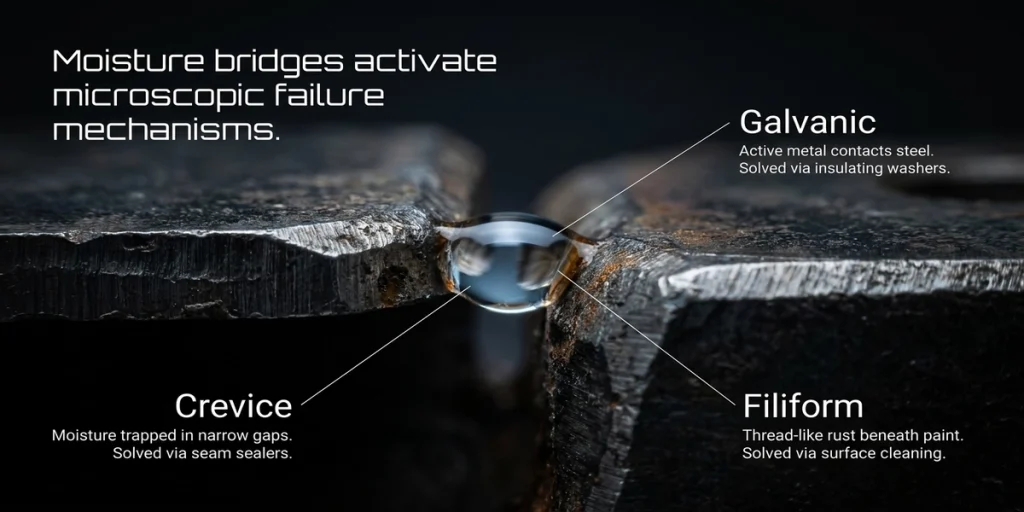
These fasteners primarily suffer from galvanic, filiform, and crevice corrosion. These occur when moisture bridges dissimilar metal surfaces. Unpainted automotive parts often develop cosmetic rust when exposed. This cosmetic rust destroys aesthetic appeal and paint adhesion.
Galvanic reactions happen when active metals contact steel components. This process requires contact between dissimilar metals and corrosive liquids. Eliminating moisture exposure stops this galvanic process immediately.
Common Corrosion Types
The following rust types typically affect fasteners:
- Galvanic Corrosion: Occurs between aluminum and steel in salt water.
- Filiform Corrosion: Thread-like rust forms beneath paint and coatings.
- Crevice Corrosion: Moisture gathers in narrow gaps between surfaces.
Isolating parts with insulating washers prevents galvanic reactions entirely. Proper surface cleaning before coating stops filiform rust effectively. Seam sealers prevent water entry to halt crevice corrosion completely.
Which Tests Measure Automotive Stainless Steel Fasteners Durability?
Testing standards measure stainless steel automotive fasteners durability by simulating environmental exposure. Engineers use laboratory tests to verify hardware longevity. Testing chambers recreate intermittent salt and humidity swings indoors. These testing metrics ensure automotive stainless steel fasteners survive harsh climates.
Automakers developed tests to stop expensive service warranty problems. Cyclic corrosion tests now provide meaningful ranking of coating systems. These tests prevent false confidence in weak finishes. Older testing protocols did not replicate actual road conditions accurately.
Laboratory Test Methods
Testing methods vary based on the desired engineering evaluation metrics.
| Стандарт | Test Method Focus | Application Use Case |
| SAE J2334 | Cyclic corrosion with humidity swings | Vehicle component simulation |
| ASTM B117 | Continuous salt fog spray | Baseline material comparison |
| ISO 9227 | Neutral salt spray evaluation | Hardware durability benchmarking |
What Are the Best Corrosion Resistant Automotive Fasteners for Cars and Trucks?
The best corrosion resistant fasteners for vehicles use thick surface treatments. Zinc acts as a protective sacrificial metal. This sacrificial action prevents catastrophic structural failure during vehicle operation.
Engineers must specify precise coating thickness for proper thread fit. Heavy-duty outdoor protection requires twenty-five to seventy-five micron thicknesses. Proper thickness guarantees parts fit without thread interference.
Coating Application Options
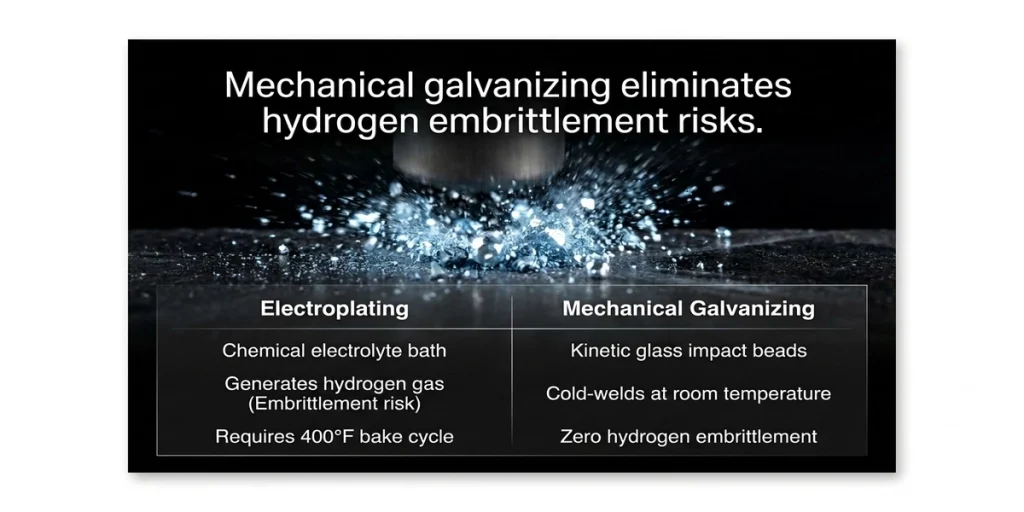
Factories use different chemical application methods to coat steel hardware. For example, zinc electroplating involves the following:
- Submerges steel parts in a chemical electrolyte bath.
- Direct electrical current forces zinc onto the steel surface.
- Generates hydrogen gas that enters high-strength steel structures.
Meanwhile, mechanical galvanizing has the following processes:
- Tumbles parts in a large drum with glass impact beads.
- Cold-welds zinc powder directly to the part kinetically.
- Eliminates hydrogen embrittlement risks for high-strength vehicle bolts.
Electroplating needs a 400°F bake cycle to remove hydrogen. Mechanical galvanizing remains a true room-temperature application process. These differences determine which method suits specific automotive chemicals fasteners.
How Does CNRL Prevent Hardware Failure?
CNRL prevents hardware failure through precise surface treatments. The company produces vehicle fasteners from grade 4.8 to 12.9. Fastener lengths range from 6 to 300 millimeters. CNRL holds strict ISO/TS16949:2016 automotive industry quality system certification. It also supplies global OEMs like ZF, FAW, and TENNECO.
CNRL applies finishes like blue-white zinc, dacromet, and mechanical phosphating. The factory guarantees part precision using rigorous testing protocols. CNRL manufactures specialized hardware for demanding global sectors. The company also offers custom stamping for structural parts.
Lightweight vehicle materials demand unique approaches to stop galling. CNRL’s helicoil inserts can benefit EV aluminum components. Product inspection reports show exact direct-reading spectrometer data.
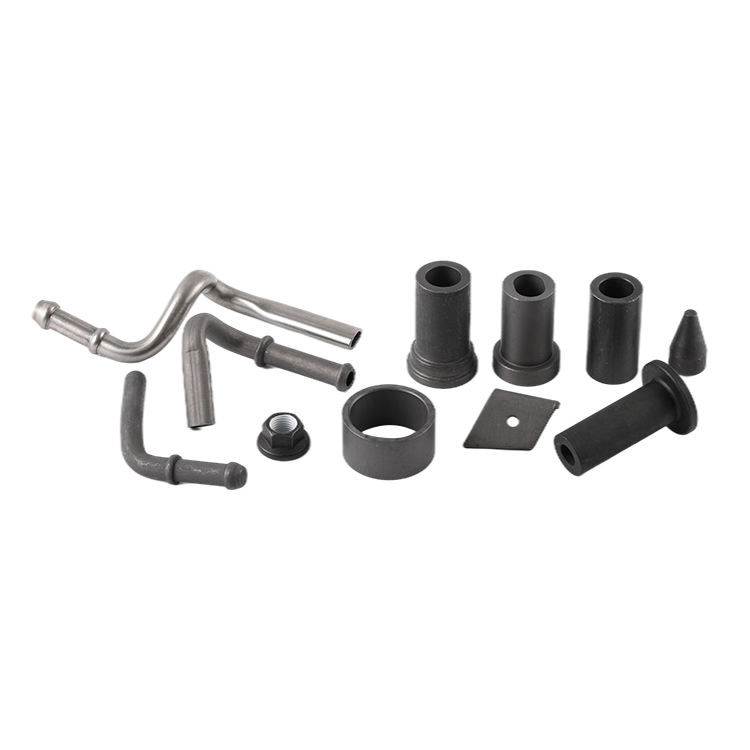
Крепежные элементы шасси легковых автомобилей и грузовиков, сертифицированные по стандарту IATF 16949: втулка, гайка, болт крепления выхлопной системы.
ПодробнееЗаключение
Securing the best corrosion resistant fasteners for cars trucks automotive demands correct surface coatings. CNRL delivers exceptional surface treatment and material modification solutions. They prevent early part failures by applying strict global engineering standards.
Связаться с CNRL to secure custom automotive fasteners. Gain verified manufacturing consistency, exact thread gauging, and long-term durability. Partner with a manufacturer equipped for your toughest automotive chemical environments.
Поиск
Категории
Теги
Продукт
- Aftermarket Fasteners
- Brake Caliper Rep Kits
- Camber Bolt
- Cylinder Bolt
- Tow Hook
- Truck Bolt & Nut
- Wheel Bolt
- Колесные гайки
- Застежка
- Болт
- Bronze pillar
- Втулки втулки
- Дорога для выхлопной трубы
- Вставка Helicoil
- Ключи
- Орехи
- Приколоть
- Заклепка
- Винты
- Штамповка деталей
- stud
- Стиральная машина
- Автомобильный
- Части тела
- Тормозная система
- Детали шасси
- Детали двигателя
- Детали трансмиссии


