Какой ремонтный комплект резьбы лучше? Time-Sert против Helicoil
Краткий ответ:
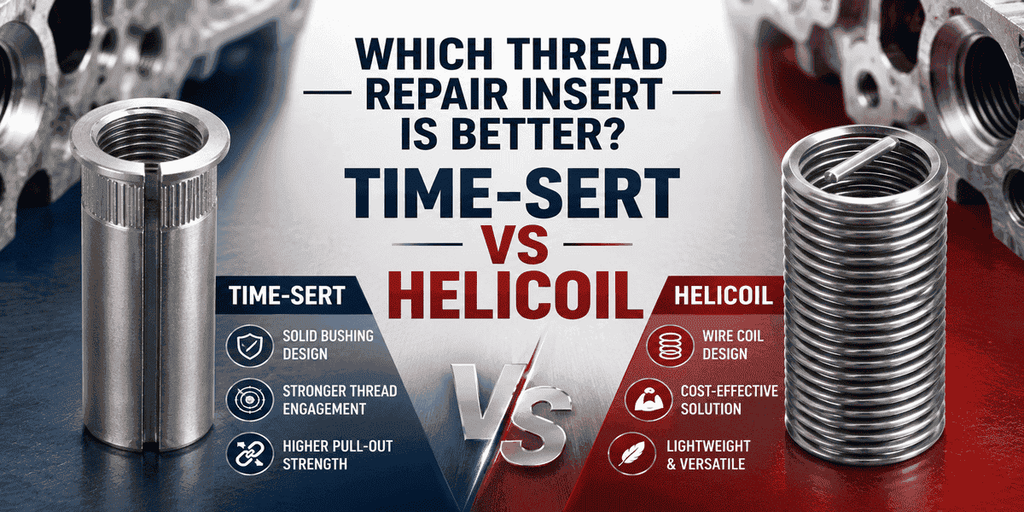
И Time-Sert, и Helicoil способны ремонтировать поврежденные резьбы; однако они имеют разную конструкцию. Helicoil изготовлен из проволоки, которая образует новую внутреннюю резьбу с небольшим количеством материала. Time-Sert изготовлен из цельной тонкостенной втулки с фланцем и стопорным устройством.
При проведении ремонтных работ в автомобильной сфере выбор между Time-Sert и Helicoil зависит от поврежденного компонента, наличия пространства, нагрузок, которые будут на него действовать, и бюджета на ремонт. Выбор между проволочной вставкой и цельной втулкой должен основываться на конкретных условиях.
CNRL производит автомобильные крепежи, а также проволочные резьбовые вставки для резьбовых узлов. Таким образом, эти продукты предлагают еще один способ получения вставок для автомобильного производства и ремонтных работ.
Почему ремонт резьбы становится необходимым?
Повреждения резьбы являются частой проблемой при ремонте автомобилей, поскольку они многократно собираются и разбираются. Алюминиевый корпус может быть подвержен повреждениям, когда крепеж перетягивается, идет перекосом или неправильно устанавливается под углом.
Другой причиной повреждения резьбы может быть коррозия, вибрация, загрязнение или предыдущий ремонт самой детали. Как только деталь не может должным образом зацепить указанный крепеж, дальнейшее затягивание болта определенно не является подходящим решением.
Вставки для ремонта резьбы помогают создать функциональную внутреннюю резьбу без необходимости замены всего компонента. Это может быть полезно в случаях с головкой блока цилиндров, блоком двигателя, корпусом трансмиссии, масляным поддоном и т. д.
Сравнение вставок для ремонта резьбы, следовательно, должно начинаться с компонента и типа повреждения.
Что такое Helicoil?
Helicoil — это проволочная резьбовая вставка, выполненная в виде спирали. После установки в подготовленное отверстие она образует новую внутреннюю резьбу, соответствующую размеру оригинального болта.
Он требует меньшего количества материала вокруг себя, что может быть полезно, если рядом с поврежденным отверстием не так много места.
Другое назначение вставок типа Helicoil — усиление внутренних резьб в мягких материалах. Например, в деталях из алюминия и магния.
Преимущества проволочной конструкции
Проволочная вставка легкая и компактная. Она позволяет распределять нагрузку на резьбу на окружающий материал, а также формировать прочную внутреннюю резьбу.
Существует несколько типов вставок, которые можно выбрать: свободно вращающиеся, фиксирующие, с хвостовиком и без хвостовика.
При сравнении Helicoil и Time-sert проволочная конструкция часто привлекательна для рутинного ремонта, где важна минимальная толщина стенки и меньшее удаление материала.
Что такое Time-Sert?
В отличие от Helicoil, Time-Sert использует не гибкую проволочную спираль, а цельную втулку с внутренней и внешней резьбой.
На верхней части вставки имеется фланец, который обеспечивает правильное позиционирование. Во время установки нижняя часть вставки садится в просверленное отверстие и сопротивляется любым попыткам выскочить при снятии болта.
Time-Sert предлагает комплекты для ремонта автомобилей, включая поврежденные резьбы головки блока цилиндров, свечей зажигания и масляного поддона.
Преимущества цельной втулки
Цельная конструкция создает сплошную стенку между установленным винтом и основным материалом. Кроме того, фланец ограничивает глубину вставки внутри отверстия.
Это может быть полезно в приложениях, где позиционирование и отсутствие движения после установки вставки имеют решающее значение.
Однако не всегда цельная втулка прочнее проволочной.
Каковы основные различия в прочности, установке и стоимости?
Основные различия между Time-sert и Helicoil заключаются в их конструкции. Одна — это вставка из скрученной проволоки, а другая — цельная резьбовая гильза.
Прочность и распределение нагрузки
Обе системы могут создавать прочные внутренние резьбы при правильном выборе и установке.
Проволочные вставки распределяют нагрузку через свою спиральную форму и широко используются для усиления резьбы в материалах с меньшей прочностью. Цельные вставки обеспечивают жесткую стенку и надежное позиционирование. Лучший выбор зависит от материала компонента, зацепления резьбы, нагрузки на болт и доступной толщины стенки.
Подготовка отверстия и пространство
Оба метода ремонта требуют подготовки поврежденного отверстия для вставки. Цельная втулка может потребовать дополнительной подготовки для своего корпуса и фланца. Проволочные вставки компактны, что может сделать их полезными там, где окружающий материал ограничен. Это различие имеет значение в тесных отливках и тонких секциях, где удаление дополнительного основного материала может быть нежелательным.
Стоимость ремонта
Стоимость включает в себя больше, чем сама вставка. Важны необходимые инструменты, время подготовки, количество вставок и то, будет ли система использоваться повторно.
Проволочные вставки часто рассматриваются для общего ремонта и серийного производства. Цельные системы могут оправдать дополнительные инструменты, когда их конструктивные особенности подходят для критического ремонта. В результате не существует единственного лучшего бренда резьбовых вставок, основанного только на цене.
Какой резьбовой вкладыш следует выбрать для автомобильных применений?
Практическое решение между Helicoil и Time-sert должно начинаться с ремонтируемой детали.
Для общей поврежденной резьбы в алюминиевом корпусе проволочная вставка может обеспечить необходимый ремонт, сохраняя при этом низкое удаление материала. Она также может хорошо работать, когда требуется усиление многих одинаковых резьбовых отверстий.
Цельная втулка может быть более целесообразной там, где надежная глубина вставки, сплошная стенка или многократное снятие болта являются основными проблемами. Ремонт резьбы свечей зажигания и некоторых резьб двигателя являются примерами, где эти особенности могут повлиять на решение.
Ранее отремонтированные резьбы
Состояние отверстия также имеет значение. Резьба, которая уже была отремонтирована и вышла из строя, может быть слишком большой или поврежденной для установки той же системы вставки.
В таких случаях может потребоваться рассмотреть ремонтные системы увеличенного размера или другие альтернативы Helicoil.
Вместо того чтобы спрашивать только о лучшем бренде резьбовых вставок, инженеры должны проверять основной материал, диаметр отверстия, доступную глубину, размер болта, ожидаемую нагрузку, температуру и требования к эксплуатации. Это приведет к более обоснованному решению, чем выбор вставки только по репутации бренда.
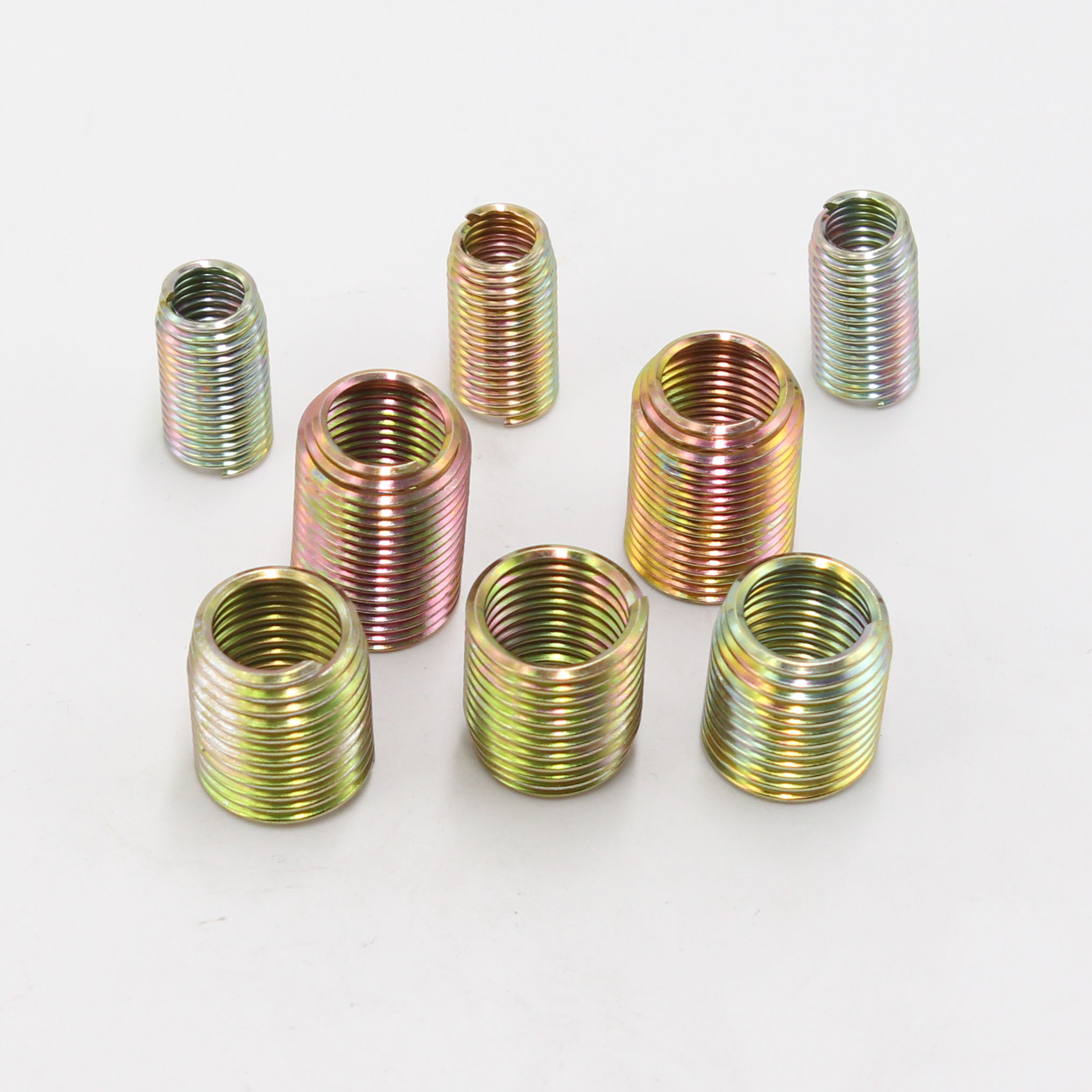
Резьбовые вставки из нержавеющей стали
ПодробнееКак проволочные резьбовые вкладыши CNRL предлагают еще один вариант?
Time-Sert и Helicoil — не единственные доступные решения для резьбовых соединений. Резьбовые вставки также могут быть подобраны в соответствии со спецификациями автомобильных или промышленных проектов.
CNRL поставляет резьбовые вставки наряду с более широким ассортиментом автомобильные крепежиДля покупателей, сравнивающих альтернативы Helicoil, это предоставляет еще один вариант поиска без изменения основных преимуществ, связанных с конструкцией резьбовой вставки.
Выбор вставок по спецификации
Полезное сравнение резьбовых ремонтных вставок должно учитывать размер резьбы, длину вставки, материал, требования к фиксации и материал, в который устанавливается вставка.
Для производственных применений также важна согласованность между вставкой, болтом и резьбовым компонентом. Эти детали работают вместе как единая система крепления.
Вот почему окончательное решение Time-sert против Helicoil должно основываться на соединении, а не на универсальном победителе. Сплошные втулки имеют преимущества для определенных ремонтов, в то время как резьбовые вставки могут предложить компактное решение для ремонта и усиления резьбы.
Резьбовые вставки CNRL добавляют еще один вариант для проектов, где спиральная конструкция подходит для применения. Изучите резьбовые вставки CNRL как альтернативу для автомобильных и промышленных резьбовых соединений. Профессиональные решения и консультации по крепежу для глобальных OEM-производителей
CNRL — ваш надежный поставщик крепежных изделий.
Резьбовые вставки из нержавеющей стали для ремонта резьбы
Получить предложение