汽车紧固件供应商必备质量文件清单
Price inevitably comes up, but with serious automotive buyers, it is rarely the starting point.
Before a purchasing manager at a European Tier 1 supplier or an American OEM talks about price, they need to see certifications. They want clear documentation and proof that the fasteners are made in a controlled, traceable, and independently audited process so they can trust them on their production line.
When your documentation is complete and accurate, the remainder of the conversation becomes significantly smoother. Gaps or inconsistencies, however, can quietly derail a deal without explanation.
Here’s what you need to provide, and why each element matters to the professionals evaluating your product.
Why Documentation Matters More Than Most Suppliers Realize
Automotive assembly doesn’t forgive mistakes. A fastener that fails in a suspension joint, a brake caliper mount, or an EV battery enclosure creates consequences that dwarf the cost of the part itself. Warranty claims. Recalls. Safety incidents. Reputational damage that takes years to recover from.
OEMs and Tier 1 suppliers manage that risk through documentation. Not promises. Not relationships. Documented, verifiable evidence that a quality system exists, functions, and has been audited by someone independent.
Overseas sourcing has made this even more critical. A buyer in Stuttgart or Detroit can’t walk your factory floor every month. Your certifications and documentation are the proxy for that physical presence. When a buyer sees a complete, current, verified certification profile, they’re seeing the next best thing to being there.
The Core Certifications
IATF 16949—Automotive Quality Management System
This is the non-negotiable. For any supplier serving automotive OEMs or their direct supply chain, IATF 16949:2016 is the baseline certification. Without it, most OEM vendor qualification conversations end before they get started. It covers process control, product safety, traceability, customer-specific requirements, and continuous improvement. It is everything that defines a supplier serious about automotive work.
It’s not a differentiator. It’s the floor.
CNRL Fasteners has held this certification since 2010. It was originally under the ISO/TS 16949 designation, maintained and upgraded through every transition to the current IATF standard. That’s 15 years of verifiable automotive quality management history. For buyers assessing supplier maturity, that track record is meaningful in a way that a recently acquired certificate simply isn’t.
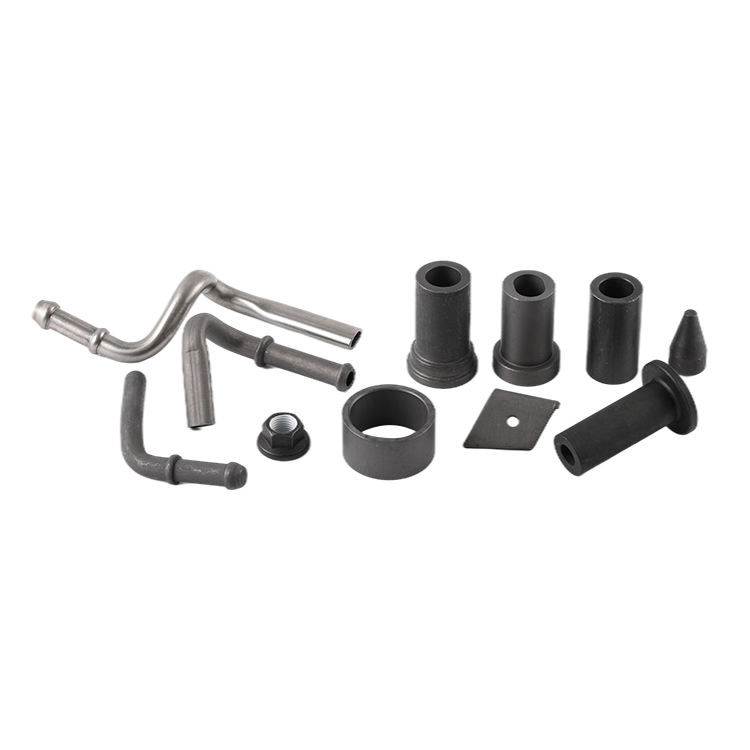
IATF 16949 Certificated Automotive truck chassis fasteners OEM bushing nut exhaust hanger rods bolt
更多详情ISO 14001—Environmental Management System
Environmental compliance used to be a secondary concern for most procurement teams. That’s changed. Major automotive OEMs and global distributors increasingly require ISO 14001 fasteners as a supply condition. This is not just for regulatory reasons, but because a supplier who becomes an environmental liability becomes their liability.
EU, US, and Japanese market compliance all create pressure here. ISO 14001 fasteners certification tells a buyer that environmental obligations are being managed through a structured, audited system. This is not ignored until a regulator shows up.
CNRL Fasteners holds ISO 14001 certification, demonstrating its commitment to environmentally responsible manufacturing.
CE Certification—European Market Access
If fasteners are going into the European Economic Area, CE certification fasteners aren’t optional—it’s a legal requirement. CE-certified fasteners confirm compliance with EU safety, health, and environmental standards. Without this certification, fasteners cannot be sold in EU markets, no matter how high their quality.
For any exporter targeting European distributors or OEM supply chains, CE certification fasteners are simply the cost of market access. CNRL Fasteners carries CE certification, making the company a legally compliant supplier for European requirements from the start.
FDA Compliance—North American and Regulated Industry Applications
FDA compliance isn’t a mainstream automotive requirement. But it matters for fasteners going into food processing equipment, medical device manufacturing, or pharmaceutical production environments. It also signals something broader. It is a higher level of process control and material traceability than many manufacturers bother with.
For buyers in North America, or buyers whose end products touch regulated industries, FDA documentation adds a layer of confidence that goes beyond standard industrial certifications. CNRL Fasteners holds FDA compliance documentation.
The Process Documents Buyers Actually Ask For
Certifications get you in the door. Process documents are what auditors dig into once they’re inside. This is the working evidence of quality control happening in real time.
| Document Type | Purpose / Why Buyers Ask For It | Key Details / What It Includes |
| PPAP Package | Most-requested document set for automotive supplier qualification; shows the quality management system works | Up to 18 elements: design records, PFMEA, control plan, measurement system analysis, dimensional results, material certifications, Part Submission Warrant (PSW); Level 3 PPAP is OEM default |
| Control Plan | Operational map of quality control for a specific part number | Monitored characteristics, measurement methods, frequency, out-of-spec actions; for fasteners: incoming material hardness, formed dimensions, thread gauging, heat treatment parameters, coating thickness, final inspection |
| PFMEA (Process Failure Mode & Effects Analysis) | Documents potential process failures and controls to prevent or catch them | Identifies risks like dimensional variation, material defects, surface treatment issues; shows level of engineering rigor |
| Material Certifications / Mill Test Reports | Traceability of raw materials; enables root cause analysis | Confirms chemical composition and mechanical properties; ensures recalls are manageable |
| Dimensional Inspection Reports | Evidence that delivered parts meet specifications | Measurement data for every delivery, traceable to calibrated instruments |
| Surface Treatment / Coating Certification | Confirms surface treatments meet specifications | Zinc plating, hot-dip galvanizing, mechanical plating; coating thickness, salt spray results, hydrogen embrittlement test data for high-strength fasteners |
| Calibration Records | Ensures inspection and measurement data are credible | Records for every gauge, tester, and instrument used in production inspection; traceable to standards |
Traceability: The Thread That Holds Everything Together
All these documents support one main requirement: traceability. Automotive buyers must be able to trace any fastener back to its production run, heat treatment batch, surface treatment lot, and original raw material.The traceability chain must be recorded and kept. IATF 16949 sets minimum retention rules, and some OEMs require up to 15 years for safety-critical parts. CNRL Fasteners keeps complete traceability records to meet these audit and recall requirements.
The Complete CNRL Fasteners Certification Profile
Buyers evaluating CNRL as a potential fastener supplier can verify the following credentials:
- IATF 16949—Automotive quality management system (held since 2010)
- ISO 14001—Environmental management system
- CE认证—European market compliance
- FDA Compliance—North American and regulated industry applications
- National High-tech Enterprise—China’s formal recognition of advanced manufacturing and R&D capability
That combination covers the documentation requirements of automotive, industrial, and regulated-market buyers across North America, Europe, and Asia.
常见问题解答
What certifications does an automotive fastener supplier need?
At minimum: IATF 16949 for automotive quality management, ISO 14001 for environmental compliance, and CE certification for European market access. FDA compliance is needed for food and medically adjacent applications. Beyond certifications, complete PPAP capability and full lot traceability documentation are expected by any serious OEM buyer.
What is ISO fastener distributor certification?
For distributors, it typically refers to ISO 9001 quality management certification—confirming that sourcing, storage, and delivery processes meet documented quality standards. For manufacturers, IATF 16949 is the higher-level standard that includes ISO 9001 requirements as a baseline.
What are CE fasteners?
CE-marked fasteners meet EU safety, health, and environmental requirements under applicable EU directives. CE marking is mandatory for fasteners sold in the European Economic Area and is verified through a formal conformity assessment process.
Why do automotive buyers demand so much documentation?
Because fastener failures in safety-critical applications create warranty costs, recall costs, and safety liabilities that massively exceed the value of the parts. Documentation is the evidence that risk was managed throughout the production process—not just asserted after the fact.
How long does quality documentation need to be kept?
IATF 16949 sets baseline retention requirements. OEM customer-specific requirements often extend those—commonly to the life of the part plus additional years, sometimes 15 years total for safety-critical automotive applications. Check each customer’s specific requirements rather than assuming the baseline applies.


