Nail vs Screw: What’s the Difference in Industrial Assembly and Manufacturing?
Understanding the difference between these fasteners matters because manufacturers depend on consistent performance, stable output, and predictable assembly quality. Nails handle shear loads well, while screws provide stronger tensile holding power. These differences influence assembly speed, line efficiency, and long-term product reliability.
More importantly, choosing the right design also requires a stable, low-defect fastener supply, something CNRL supports through strict material verification, advanced testing, and digital-factory production systems. When engineers compare nail vs screw, they are also evaluating whether their supplier can maintain accuracy, uniformity, and dependable delivery across every batch.
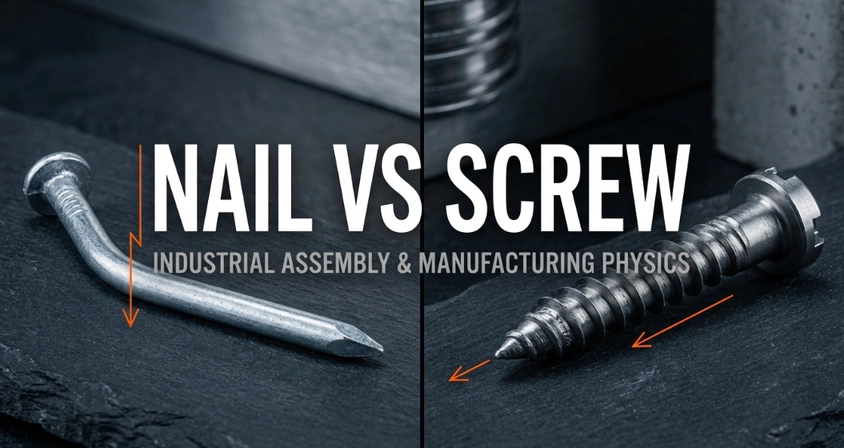
What Nails and Screws Are in Industrial Use
Nails and screws join materials, but they behave differently in real manufacturing environments. Nails use friction and a smooth shank, while screws create mechanical engagement through threads.
What Is a Nail?
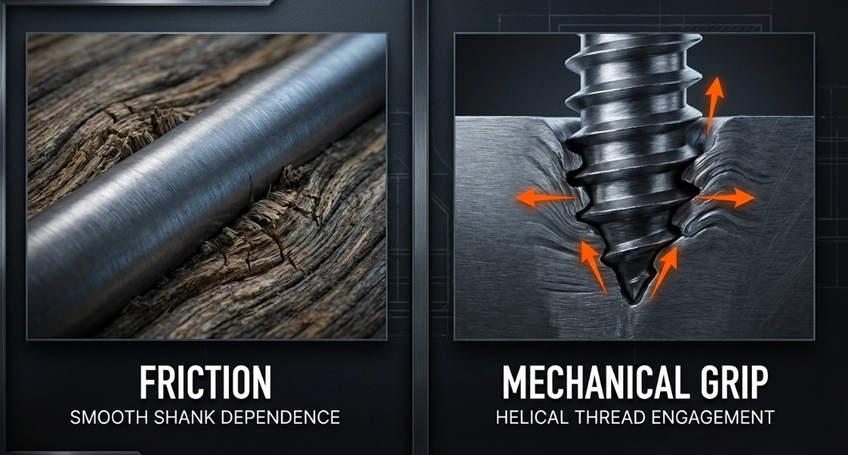
A nail is driven into materials using impact force or pneumatic equipment.
- Fast installation supports high-throughput production.
- Strong shear behavior helps in assemblies with sideways movement.
- The connection relies on friction, allowing controlled deformation instead of brittle failure.
What Is a Screw?
A screw rotates to engage threads with the material, forming a secure and adjustable joint.
- High tensile strength supports pull-out resistance.
- Performs well under vibration or repeated load cycles.
- Ideal for joints requiring torque control or disassembly.
Shear Strength and Tensile Strength in Fastener Selection
Industrial teams often ask: “Are screws stronger than nails?” The answer changes depending on load direction.
Tensile Strength: Where Screws Excel
Threaded fasteners resist pull-out forces effectively because their threads distribute force along the shaft. This is important for machines, rigid components, and assemblies that require stable clamping under vibration.
Shear Strength
Manufacturers often question why use nails instead of screws in certain applications. Nails bend under lateral impact, protecting the joint instead of snapping.
This is why many teams evaluate shear strength nails vs screws when selecting fasteners for lateral-load environments.
Shear Strength Nails vs Screws
A smooth fastener can outperform a threaded one under heavy shear. Screws may fracture if their thread engagement or material grade does not match the application.
How Nails and Screws Influence Industrial Assembly Efficiency
In high-volume manufacturing, the choice between nails or screws affects cycle time, machine compatibility, and cost.
Speed of Installation
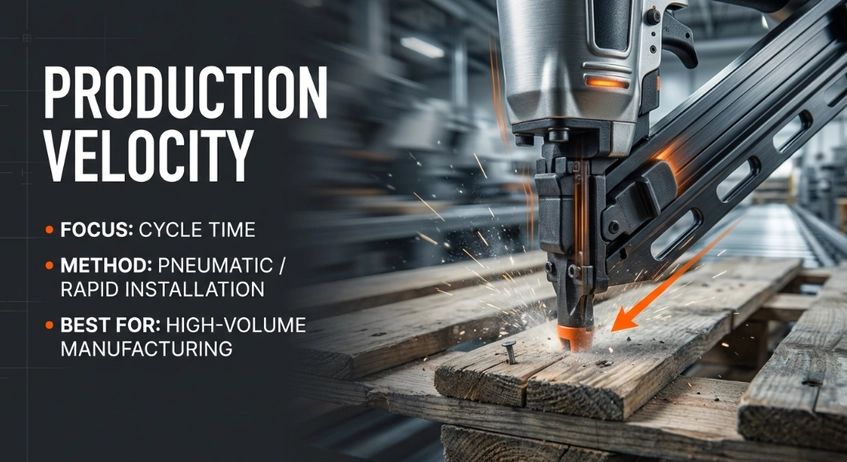
Impact-driven fasteners install quickly, reducing cycle time and supporting high-volume production where assembly speed is a priority.
Precision and Torque Control
Threaded fasteners allow torque measurement. Production lines requiring traceability and repeatable clamping rely on torque-controlled installation to reduce rework.
Material Behavior and Cost
Smooth fasteners work well in flexible materials and cost less per piece. Threaded fasteners offer higher precision and are preferred for rigid substrates or adjustable joints.
Fastener Quality Assurance and Its Impact on Production Stability
CNRL’s digital factory transforms fastener supply from a commodity into a performance advantage. Every stage, from raw material testing to final inspection, is designed to help customers avoid downtime, reduce waste, and maintain steady production cycles.
Material Verification and Microstructure Testing
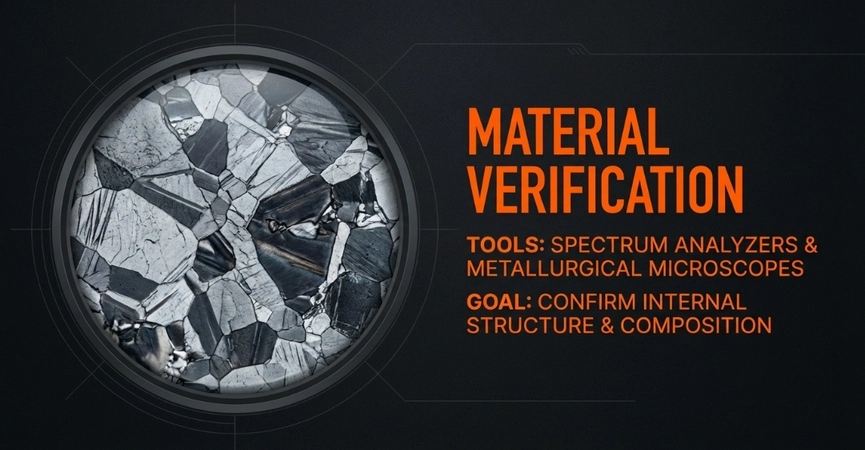
CNRL uses spectrum analyzers and metallurgical microscopes to validate alloy composition and internal grain structure.
Customer benefit: Fewer unexpected failures and more consistent torque behavior.
Tensile and Hardness Testing for Strength Accuracy
Tensile testers measure load capacity, while hardness testers confirm resistance to wear and deformation.
Customer benefit: Predictable mechanical performance across every batch, reducing line stoppages and tool calibration issues.
Surface and Corrosion Testing
Salt-spray chambers and friction-coefficient machines ensure surface coatings deliver stable torque values in automated lines.
Customer benefit: Fewer jammed tools, reduced bolt-seizing incidents, and smoother assembly flow.
How CNRL’s QA Directly Solves Customer Pain Points
- Extremely low defect rates reduce scrap, rework, and warranty risk
- Stable supply prevents assembly interruptions
- Consistent torque performance improves automated line accuracy
- Predictable mechanical behavior reduces part failures in the field
These advantages allow manufacturers to achieve shorter production cycles, higher yield rates, and more reliable assembly performance, outcomes that are rarely possible with inconsistent or unverified fasteners.
Industrial Decision Guide: When to Use Nails or Screws
Both fasteners serve critical but different purposes. Choosing the right one reduces failure risk and improves long-term performance.
Use Nails When:
- Loads are mostly shear-based or impact-based
- Speed and cost efficiency matter
- Material expansion or movement is expected
Use Screws When:
- A strong tensile grip is needed
- The joint requires future disassembly
- Torque-controlled installation improves quality
Conclusion
Both fasteners serve unique roles in industrial assembly. Nails support strong shear resistance and rapid installation, while screws offer controlled fastening and high tensile strength. Understanding these differences helps engineers improve performance, reduce rework, and support safer equipment assembly. When selecting between fastener types, including comparisons like nail vs screw, engineers should consider loading direction, material behavior, and production requirements.
CNRL’s advanced testing systems, digital production control, and rigorous inspection processes ensure stable quality, accurate torque performance, and extremely low defect rates. As a distributor-oriented supplier, CNRL helps manufacturers reduce downtime, improve assembly efficiency, and secure a dependable fastener supply chain.
If your production line requires consistent performance, technical support, or a reliable supply partner, contact CNRL for customized fastening solutions designed to support high-efficiency manufacturing.
FAQs
Why choose nails instead of screws?
They perform well in sideways loads and install quickly, making them ideal for impact-based applications.
Do screws provide better overall strength?
They offer superior pull-out resistance, especially in rigid materials.
Do screws handle vibration better?
Yes. The threaded grip maintains clamping force under repeated movement.
Can both be used in one assembly line?
Yes. Many industrial designs combine both to balance speed, cost, and performance.
Search
Categories
Tags
Product
- Aftermarket Fasteners
- Brake Caliper Rep Kits
- Camber Bolt
- Cylinder Bolt
- Tow Hook
- Truck Bolt & Nut
- Wheel Bolt
- Wheel Nuts
- Fastener
- Bolt
- Bronze pillar
- Bushing Sleeves
- Exhaust Hanger Road
- Helicoil Insert
- Keys
- Nuts
- Pin
- Rivet
- Screws
- Stamping Parts
- stud
- Washer
- Automotive
- Body Parts
- Brake System
- Chassis Parts
- Engine Parts
- Transmission Parts


