Perni Ruota Estesi: Quando Ti Servono E Come Sceglierli
Prigionieri ruota estesi sono prigionieri ruota più lunghi utilizzati quando i prigionieri normali non offrono abbastanza filettatura per i dadi della ruota. Ciò può accadere dopo aver aggiunto ruote aftermarket, distanziali o alcuni adattatori del mozzo.
Possono sembrare una piccola parte, ma aiutano a tenere la ruota al mozzo. Se il prigioniero è troppo corto, il dado della ruota potrebbe non agganciare abbastanza filettatura. Ciò può rendere la ruota non sicura.
Cosa sono i prigionieri ruota estesi?
I prigionieri ruota estesi sono prigionieri più lunghi dell'OEM. OEM significa la lunghezza del pezzo originale fornito con il veicolo.
Un prigioniero ruota passa attraverso il mozzo. Il dado della ruota si stringe sul prigioniero e blocca la ruota in posizione. Quando la ruota, il distanziale o l'adattatore sono più spessi dell'impostazione originale, il vecchio prigioniero potrebbe non essere abbastanza lungo.
È allora che vengono utilizzati i prigionieri ruota estesi. Danno al dado della ruota più filettatura su cui aggrapparsi.
Sono spesso necessari con distanziali, ruote aftermarket larghe e adattatori con centraggio del mozzo. Quando è necessaria anche la correzione del diametro del mozzo, un anello mozzo-centrico aiuta a spiegare come la ruota si centra sul mozzo, mentre i prigionieri e i dadi della ruota gestiscono il bloccaggio.
Alcune persone cercano anche bulloni distanziali quando lavorano su questa configurazione. Su molti veicoli, il termine migliore è prigionieri ruota estesi, perché la ruota utilizza prigionieri e dadi invece di bulloni ruota.
Prigionieri ruota estesi vs standard
I prigionieri ruota standard sono realizzati per la configurazione di fabbrica della ruota. Hanno la lunghezza giusta per la ruota originale, il mozzo originale e il dado ruota originale.
I prigionieri ruota estesi sono più lunghi. Vengono utilizzati quando lo spessore aggiunto riduce la quantità di filettatura che il dado ruota può tenere.
La differenza principale è l'innesto della filettatura. L'innesto della filettatura significa quanta parte del dado ruota tiene completamente il prigioniero.
Una regola comune è avere un innesto della filettatura di almeno 1,5 volte il diametro del prigioniero. Ad esempio, un prigioniero da 12 mm dovrebbe avere circa 18 mm di innesto della filettatura.
Questa è solo una regola di base. Gruppi di corse, marchi di ruote e produttori di veicoli possono avere requisiti più severi.
Troppo poco innesto della filettatura è rischioso. Il dado ruota potrebbe sembrare stretto, ma potrebbe non tenere abbastanza filettatura. Troppo spessore in eccesso può anche causare problemi se il prigioniero sporge troppo o non si adatta al coprimozzo.
Il dado ruota deve comunque corrispondere al prigioniero. La dimensione della filettatura, il tipo di sede e lo stile del dado sono tutti importanti. Diversi tipi di dadi ruota possono utilizzare sedi diverse, quindi la ruota, il dado e il prigioniero devono essere controllati come un unico set.
Tabella dimensioni prigionieri ruota
Una tabella delle dimensioni dei prigionieri ruota ti aiuta a confrontare la dimensione della filettatura, il passo e l'uso comune. Non sostituisce la misurazione del veicolo, ma fornisce un buon punto di partenza.
| Dimensione filettatura prigioniero ruota | Uso comune |
| M12 x 1.25 | Alcuni veicoli Nissan, Subaru e altri veicoli giapponesi |
| M12 x 1.5 | Molti veicoli Honda, Toyota, Mazda, Hyundai e Kia |
| M14 x 1.5 | Molti camion, SUV e veicoli passeggeri più recenti |
| M14 x 2.0 | Alcune applicazioni Ford, europee e per camion |
| 1/2″-20 | Molti veicoli e rimorchi USA più vecchi |
| 9/16″-18 | Alcuni usi per camion e rimorchi pesanti |
Controllare sempre il prigioniero effettivo prima dell'acquisto. Due veicoli dello stesso marchio possono utilizzare filettature diverse.
Per i prigionieri ruota estesi, misurare anche il diametro del zigrino. Il zigrino è la parte scanalata che si preme nel mozzo. Se il zigrino è troppo piccolo, il prigioniero può girare. Se è troppo grande, può danneggiare il mozzo.
Controllare anche la lunghezza totale, la lunghezza della filettatura e la forma della spalla. Questi piccoli dettagli decidono se il prigioniero si posizionerà correttamente.
Come installare i prigionieri ruota estesi
I prigionieri ruota estesi sono solitamente di due tipi: a pressione e avvitabili.
I prigionieri a pressione hanno una spalla zigrinata. Vengono pressati nel mozzo dal retro. Sono comuni su molte auto passeggeri e camion leggeri.
I prigionieri avvitabili si avvitano nel mozzo. Sono comuni in alcune configurazioni di corse, europee e personalizzate per ruote.
Gli attrezzi dipendono dal veicolo, ma il lavoro richiede spesso un martinetto, cavalletti, chiave per dadi, set di chiavi a bussola, martello o pressa e chiave dinamometrica. Alcuni mozzi devono essere rimossi prima.
Un'installazione semplice di solito procede così:
- Sollevare il veicolo in sicurezza e rimuovere la ruota.
- Rimuovere le parti del freno se bloccano il prigioniero.
- Spingere o battere il vecchio prigioniero fuori dal mozzo.
- Abbinare la lunghezza, la filettatura e il zigrino del nuovo prigioniero.
- Premere il nuovo prigioniero in posizione dritta.
- Reinstallare le parti del freno e la ruota.
- Serrare i dadi ruota al valore corretto.
Non tirare un nuovo prigioniero con un dado ruota a meno che il metodo non sia sicuro per quel veicolo. Può danneggiare le filettature se fatto male.
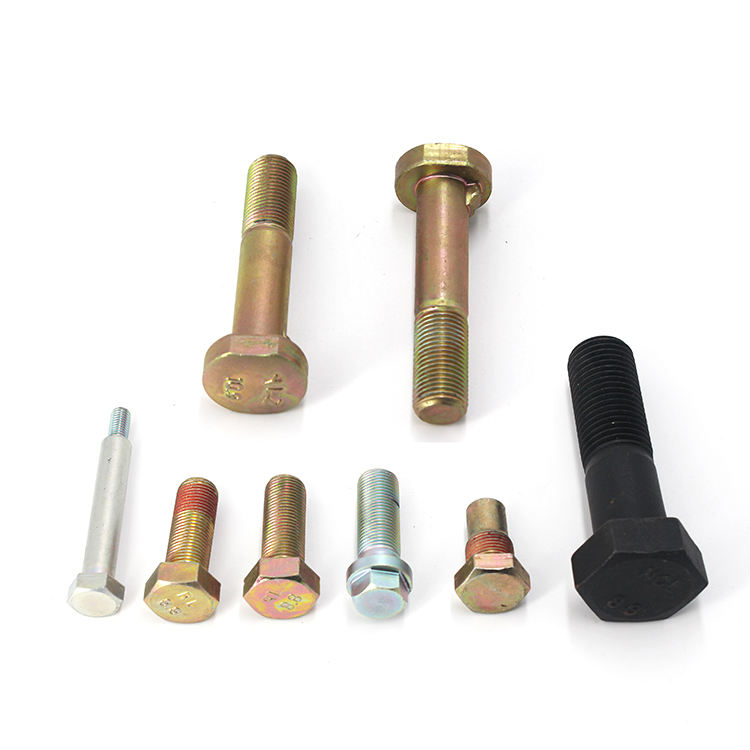
Bullone esagonale standard per automobili zincato di colore non standard di grado 10.9
Maggiori dettagliConsiderazioni su materiale e classe
I prigionieri ruota estesi necessitano della giusta resistenza, non solo della giusta lunghezza.
Grado 10.9 è spesso una scelta minima per molte esigenze di prigionieri ruota automobilistici. Alcuni usi in corse o carichi pesanti potrebbero richiedere materiale più resistente o un trattamento termico speciale.
Il trattamento termico è importante perché influisce sulla resistenza e sulla tenacità. Un prigioniero dovrebbe essere resistente, ma non fragile.
Anche il rivestimento è importante. I prigionieri ruota sono esposti ad acqua, sporco, polvere dei freni e sale stradale. Un rivestimento scadente può arrugginire rapidamente e rendere più difficile la rimozione futura.
Controllare questi punti prima di scegliere prigionieri ruota aftermarket:
- Abbinare il passo della filettatura al dado ruota.
- Abbinare il diametro del zigrino al mozzo.
- Utilizzare la lunghezza corretta per il distanziale o la ruota.
- Controllare la classe e il trattamento termico.
- Scegliere il rivestimento in base all'uso su strada e alle condizioni meteorologiche.
Inoltre, non confondere i prigionieri ruota con altri elementi di fissaggio del veicolo. Ad esempio, i bulloni delle piastre paramotore potrebbero richiedere dimensioni maggiori quando vengono aggiunti accessori, ma non tengono la ruota al mozzo. Ogni elemento di fissaggio deve corrispondere al proprio carico e alla propria posizione.
In applicazioni di fissaggio automobilistico, dimensione, classe, rivestimento e carico cambiano tutti il modo in cui un elemento di fissaggio dovrebbe essere selezionato.
Domande frequenti
Quando ho bisogno di prigionieri ruota estesi?
Hai bisogno di prigionieri ruota estesi quando il dado ruota non ha più un innesto di filettatura sufficiente. Ciò accade spesso con distanziali, ruote aftermarket spesse o alcune configurazioni di adattatori per mozzo.
I prigionieri ruota aftermarket sono sicuri?
I prigionieri ruota aftermarket possono essere sicuri se la dimensione, la classe, il zigrino, il rivestimento e il passo della filettatura sono corretti. Non sceglierli solo in base alla lunghezza.
Come si usa una tabella delle dimensioni dei prigionieri ruota?
Utilizzare una tabella delle dimensioni dei prigionieri ruota per confrontare le dimensioni comuni delle filettature. Quindi misurare il proprio prigioniero, mozzo e dado ruota prima dell'acquisto. La tabella è solo un punto di partenza.