Custom Automotive Fasteners: When Is It Worth Investing In Non-Standard Parts?
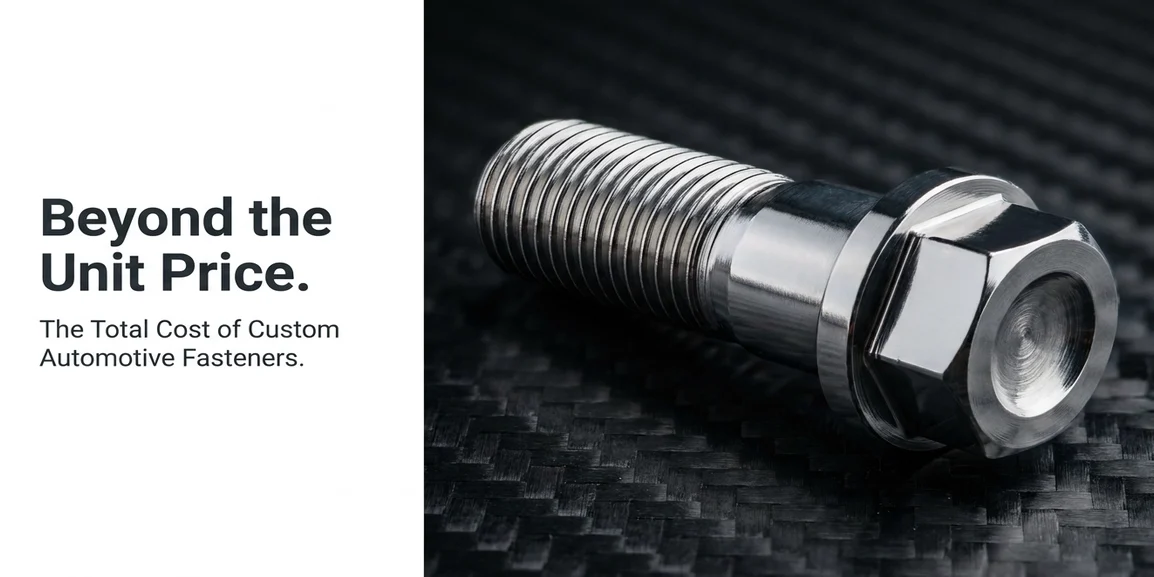
Custom automotive fasteners are worth investing in when a standard part creates extra components, difficult assembly or fit problems. The unit price may be higher, but the total cost can be lower when one part replaces several loose parts.
For procurement directors and project managers, the decision should balance cost, function and risk. A custom part makes sense when it reduces part count, saves space, supports lightweighting or solves a repeated assembly issue.
When Do Standard Automotive Fasteners Stop Working Well?
Standard automotive fasteners stop working well when the joint needs a special shape, load path, coating or installation method. This often happens in engine, chassis, body, transmission or brake system areas.
A standard bolt may fit the thread, but that does not mean it fits the assembly. The joint may still need a washer, sleeve, spacer, clip or bracket. It may also need a lower head height, longer shoulder, special flange or controlled thread length.
Each added part creates another inventory line. It also adds another step for operators during installation. In a high-volume program, those small steps can affect picking accuracy, assembly speed and rework risk.
This is where カスタム自動車用ファスナー become more than a part replacement. They become a way to simplify the assembly.
How Can One Custom Fastener Reduce Total Component Count?
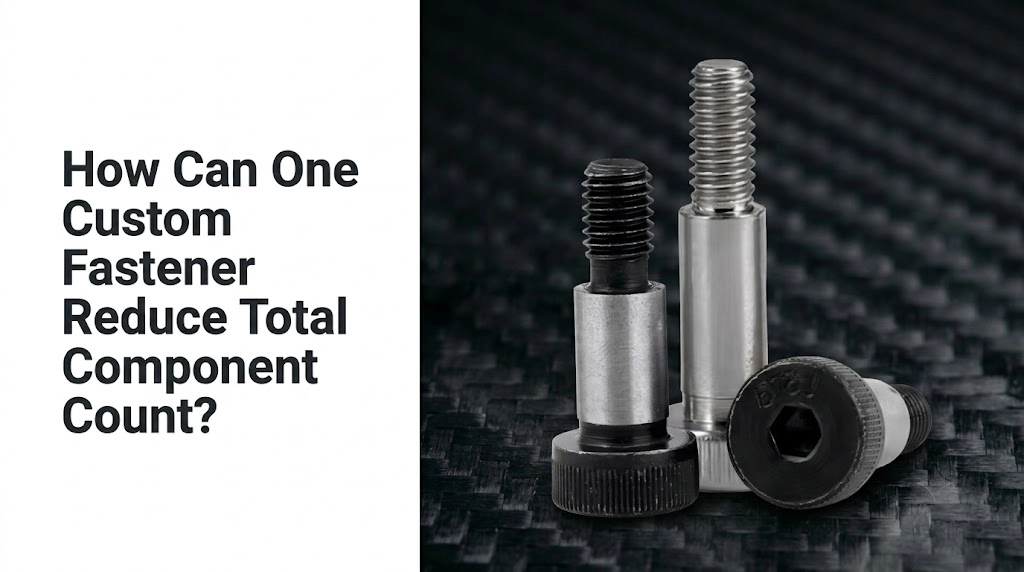
One custom fastener can reduce total component count by combining several functions into one part. A shoulder bolt can handle fastening and spacing. A flanged nut can reduce the need for a separate washer. A formed sleeve can help with alignment while supporting the joint.
This matters because automotive cost is not only the price of the fastener. It also includes storage, handling, inspection, installation and service risk.
| Assembly issue | Standard hardware problem | Custom part advantage |
| Tight space | Extra parts need more clearance | One part can combine functions |
| Weight control | Washers or spacers add mass | Geometry can remove unused material |
| Assembly speed | Operators handle several loose parts | Fewer parts reduce handling steps |
| Fit consistency | Catalog parts may not match the joint | Dimensions can follow the drawing |
| Service repair | Replacement hardware may be hard to match | Samples can guide non-standard production |
For example, a shoulder-bolt style part can be useful when the joint needs both fastening and spacing. In that kind of design review, buyers may compare the required dimensions with a socket shoulder bolt design before deciding what must be customized.
Why Do Space-Limited Vehicle Designs Need Non-Standard Fasteners?
Space-limited vehicle designs need non-standard fasteners because standard hardware is not always shaped for the real installation area. Engine bays, brake assemblies, chassis brackets and transmission housings often leave little room for extra washers, sleeves or spacers.
A fastener may need a narrow head, special shoulder, partial thread or specific coating. It may also need to work near rubber, aluminum, plastic, coated steel or moving parts.
For lightweight applications, the weight saving from one fastener may look small. But across many vehicle assemblies, removing loose parts can support better material control and simpler assembly.
This is why automotive specialty fasteners are often reviewed during redesign, localization and cost-reduction projects. Engineering teams can improve fit, while procurement teams may reduce the number of components that need to be sourced and controlled.
When Do Import Car Programs Need Specialty Automotive Fasteners?
Specialty automotive fasteners for import cars are often needed when local stock cannot match the original part. The difference may involve thread pitch, head style, flange diameter, shoulder length, coating or material grade.
Some parts look similar but behave differently during use. A small mismatch can cause poor clamp force, coating failure, loosening or installation complaints.
For specialty automotive fasteners for imports, buyers should send drawings or physical samples when possible. Photos can help with identification, but they cannot confirm hardness, tolerance or coating thickness.
This is important for aftermarket kits, repair programs and replacement part sourcing. If the part does not match the original function, the buyer may face returns, delays or repeated quality complaints.
What Should Buyers Check Before Choosing A Custom Part?
Buyers should check the full fastening function before choosing a custom part. A strong RFQ should explain what the part needs to do, not only what size it should be.
A practical RFQ should include:
- Application area: Engine, chassis, body, brake or transmission system
- Main function: Clamping, spacing, alignment, locking or vibration control
- Material: Carbon steel, stainless steel, alloy steel or another required material
- Strength grade: Such as 4.8, 8.8, 10.9 or 12.9 where applicable
- Surface treatment: Zinc, black zinc, Dacromet, nickel or another coating
- Testing request: Hardness, tensile strength, coating thickness or dimensional report
- Reference details: Drawing, sample, 3D file or original part number
The RFQ should also explain the current problem. Is the part too long? Is the head too wide? Does the joint need a spacer? Is corrosion the main issue? Is the operator handling too many loose parts?
That information helps the supplier review the real working condition. It also reduces the risk of copying an old part without solving the reason it failed.
How Can CNRL Fasteners Support Non-Standard Automotive Parts?
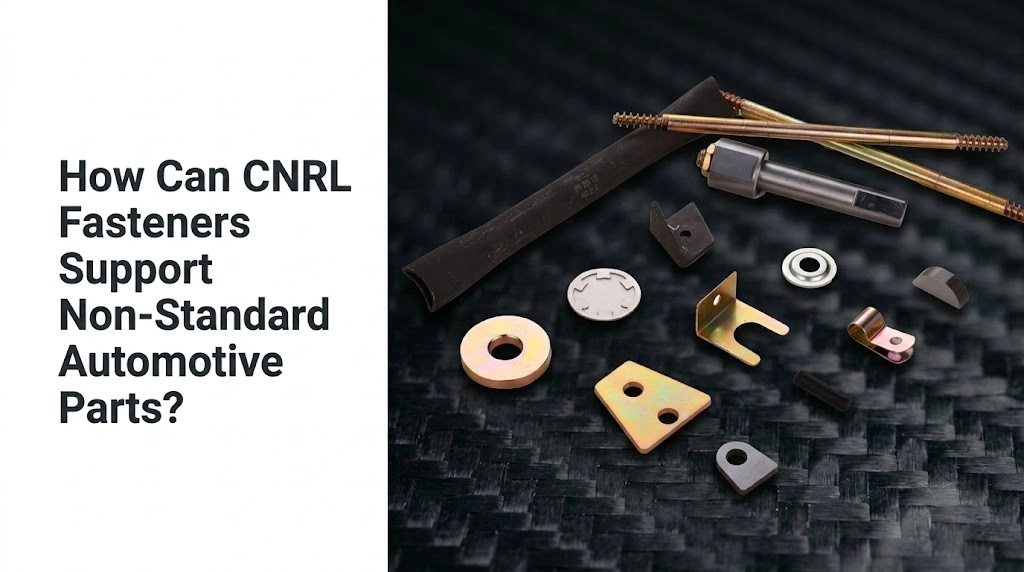
CNRL Fasteners supports custom sizes, materials, strength grades and surface treatments for automotive and industrial fastening projects. This is useful when buyers need more than a catalog item for bolts, nuts, studs, sleeves, pins, washers or other non-standard parts.
For engine-related assemblies, the fastener may need to combine several functions in one location. When a design uses a bushing, washer and bolt together, buyers may review an automotive engine fastener assembly as a reference before confirming the final drawing.
This type of review helps both sides. Engineering can check fit, movement, coating and load. Procurement can check whether one customized part may replace several separate components.
CNRL’s listed custom fastener capability includes diameter ranges from 3 mm to 30 mm, length ranges from 6 mm to 300 mm and strength grades from 4.8 to 12.9. Its custom page also lists carbon steel, stainless steel, titanium alloy, copper and iron as material options.
When Is The Higher Unit Price Easier To Justify?
The higher unit price is easier to justify when one custom part removes other costs from the project. These costs may include extra components, longer assembly time, added inspection points, rework or field complaints.
A non-standard part may be worth reviewing when:
- One fastener can replace two or more parts
- Installation space is limited
- Weight reduction is part of the project target
- The current joint needs too much manual adjustment
- Standard parts keep causing fit issues
- Import car replacement parts are difficult to source
- The design needs a special material, grade or coating
Procurement should compare the custom fastener price with the full installed cost. Engineering should check whether the new design reduces risk without creating manufacturing problems.
Send A Complete RFQ Before Investing In Custom Parts
Custom automotive fasteners are not always the right choice. Standard fasteners are still better for simple joints with enough space, normal loads and easy sourcing.
But when a fastening point affects weight, fit, assembly time or long-term service, a custom design may be easier to justify. A complete RFQ should include drawings, samples, material requirements, coating needs, testing requests and working conditions.
CNRL Fasteners can then review whether a non-standard fastener can reduce total component count, simplify assembly or solve the fit issue more directly.


