How Do Automotive OEMs Audit Fastener Suppliers?
Getting onto an OEM-approved supplier list is one thing. Staying on it is another entirely. Most suppliers focus all their energy on the initial qualification. Then they relax. That’s usually when things start to slip, and OEM auditors notice.
Automotive OEMs audit their fastener supply base regularly. Quality systems, process controls, delivery performance, and corrective action history—all of it gets reviewed. The suppliers who understand what auditors are actually looking for are the ones who stay on the list and grow their business with the brands that matter.
The ones who don’t tend to find out the hard way. Here’s how the process actually works.
Why OEMs Audit Fastener Suppliers
Fasteners are small. Individually, most of them cost less than a dollar. But they’re everywhere in a vehicle—chassis mounts, engine assembly, transmission, braking systems, EV battery enclosures, and hundreds of body and trim connection points. Their collective role in vehicle safety and assembly reliability is enormous.
A fastener that falls short of tensile strength specification, loses clamp force under vibration, or corrodes ahead of schedule creates warranty claims, field failures, and, in the worst cases, safety incidents. The OEM carries those consequences, financially and reputationally, long after the part left the supplier’s loading dock.
Auditing the supply base is how OEMs manage that exposure systematically. The best supplier audits aren’t punitive exercises. They’re collaborative. The goal is to verify that the supplier’s processes consistently produce conforming parts and to catch problems before they become field issues. That’s the mindset worth understanding if you want to approach these audits the right way.
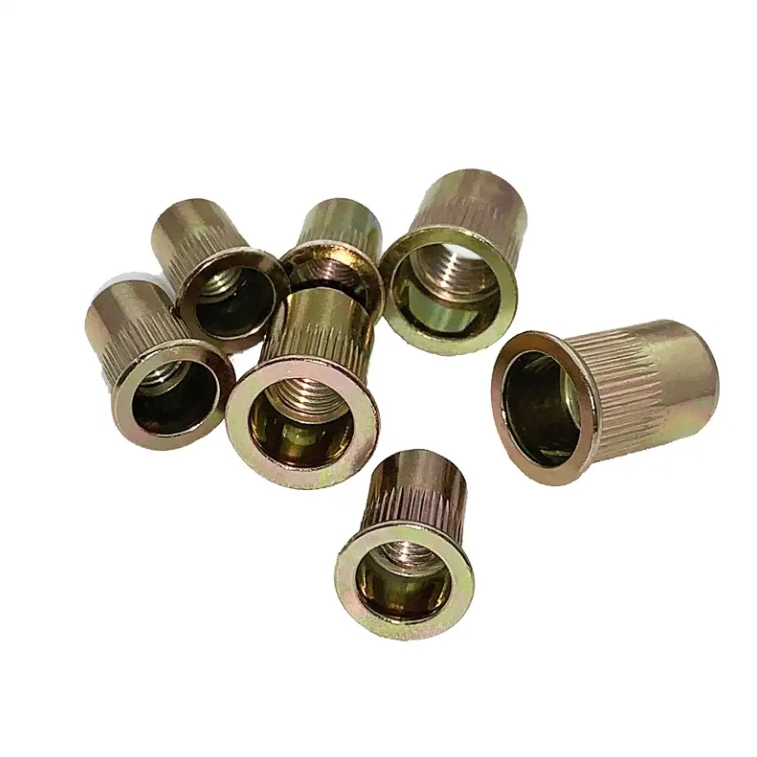
Высокоточные крепежные решения, соответствующие стандартам ISO, DIN и ANSI.
ПодробнееThe Two Main Audit Types
System Audits
A system audit examines the quality management system, focusing on how quality is structured, documented, and controlled. Auditors review records against IATF 16949 and any applicable customer-specific requirements (CSRs).
For fastener suppliers with IATF 16949 certification, third-party audits cover much of this. OEM-specific audits, however, go further into CSR compliance. Programs like Volkswagen’s Formel Q, Daimler’s supplier quality requirements, and Ford’s Q1 impose expectations beyond the base IATF standard, requiring suppliers to meet both sets of rules.
Process Audits
Process audits assess production on the factory floor. Auditors verify that procedures are followed, equipment is calibrated, operators are qualified, and inspection data aligns with the control plan.
Layered process audits (LPAs) take this further, with supervisors, managers, and plant directors verifying compliance at regular intervals. OEMs like GM and Stellantis require LPAs, which show that process discipline is embedded in daily operations rather than staged for audits.
For fastener manufacturers, audits focus on forming, heat treatment, обработка поверхности, and final inspection—stages where most quality issues occur. Auditors spend their time accordingly.
What OEM Auditors Actually Look For
| Audit Focus Area | What Auditors Check | Основные выводы |
| Прослеживаемость | Every fastener can be traced back through its steel, heat treatment, plating, and production date. | End-to-end traceability signals maturity; gaps signal risk. |
| Capability Data | Process capability (Cpk) for dimensions, tensile strength, hardness, thread form | Shows processes are controlled; inspection data alone is insufficient. |
| PPAP Completeness | Complete, current, and accessible Production Part Approval Package | Outdated/missing documents raise doubts about the overall quality system. |
| Corrective Action History | Root cause analysis, containment, verified fixes | Demonstrates a serious quality culture; weak actions indicate risk. |
| Supplier Management | Qualification of raw material suppliers, verification of material certifications | Quality starts at the raw material source, not the factory gate. |
| Management Engagement | Top management commitment, tracking of objectives, audit follow-up, resource allocation | Visible engagement is mandatory; auditors detect gaps quickly. |
CNRL Fasteners has worked directly with OEMs and component giants including FAW, Audi, Daimler, ZF, and Tenneco. This experience makes the audit process familiar, and the expectations are largely consistent across these organizations.
The Qualification Phases Before Ongoing Audits
Before reaching the stage of regular ongoing audits, OEMs run a structured qualification process. Most suppliers don’t think carefully enough about this phase.
- Desk Review: Submit quality documentation (IATF 16949 certificate, quality manual, process capability data, PPAP samples). Screens out suppliers who don’t meet baseline requirements.
- Initial On-Site Assessment: An OEM or Tier 1 engineer tours the facility, reviews tooling, equipment, and calibration records, and evaluates the quality team. Follows structured audit methods (e.g., VDA 6.3).
- Trial Production Run: A controlled run under enhanced inspection, followed by PPAP submission. OEM verifies dimensional results, material certifications, and surface treatment from actual production.
- Ongoing Performance Monitoring: Approved suppliers tracked continuously for quality metrics, PPM, and delivery performance. Performance below thresholds triggers re-audit or escalation; approval is conditional on sustained results.
Часто задаваемые вопросы
How often do OEMs audit fastener suppliers?
Annual surveillance audits are the standard for active suppliers. Additional audits can be triggered by quality escapes, customer complaints, or significant process changes. Some OEMs run periodic second-party audits separately from the third-party IATF certification schedule.
What is an OEM fastener supplier qualification process?
It typically covers a documentation review, an on-site process audit, a trial production run with PPAP submission, and ongoing performance monitoring. Major OEMs may require specific audit frameworks—VDA 6.3 for Volkswagen and Audi, AIAG CQI assessments for North American OEMs, or customer-specific supplier quality manuals.
What do OEM fastening systems mean for suppliers?
It refers to the complete fastener specification packages OEMs develop for their vehicle platforms—part numbers, grades, coatings, torque specifications, and application requirements. Suppliers must demonstrate consistent capability against those specifications across production runs, not just for initial qualification samples.
What is the VDA 6.3 process audit?
VDA 6.3 is a German automotive industry process audit standard used by Volkswagen, Audi, BMW, and Daimler to evaluate supplier manufacturing processes. It scores performance across eight elements, including project management, product and process development, supplier management, production control, and customer support.
Can a fastener supplier work with multiple OEMs at the same time?
Yes, and many do. Managing multiple OEM customer-specific requirements simultaneously requires a QMS that can accommodate different CSR packages and demonstrate independent compliance with each. Suppliers with established IATF 16949 systems have a structural advantage here because the framework already supports that flexibility.


