Decodifica dei numeri di parte dei elementi di fissaggio automobilistici: Come leggere le stringhe di specifiche

Tipi di fissaggi automobilistici sono più facili da confrontare quando gli acquirenti sanno leggere l'intera stringa di specifiche. Un numero di parte può includere lo standard, il diametro, il passo della filettatura, la lunghezza, il grado di resistenza, il materiale, il rivestimento e talvolta un codice cliente.
Per ingegneri e team di approvvigionamento, non si tratta solo di una questione burocratica. Una lettera o un numero sbagliato possono cambiare l'accoppiamento della filettatura, il comportamento della coppia, la resistenza alla corrosione o il risultato dell'assemblaggio.
Perché gli acquirenti dovrebbero decodificare il codice completo del fissaggio?
Gli acquirenti dovrebbero decodificare il codice completo del fissaggio perché il nome del prodotto da solo non è sufficiente. Un "bullone esagonale" o un "dado flangiato" possono avere molte dimensioni, gradi, rivestimenti e standard possibili.
Nel settore dei fissaggi automobilistici, una piccola differenza può creare un vero problema di assemblaggio. Un bullone con il passo sbagliato può danneggiare la filettatura di accoppiamento. Un dado con la classe di resistenza sbagliata potrebbe non corrispondere al bullone. Una modifica del rivestimento può anche influire sulla resistenza alla corrosione o sul comportamento di serraggio.
L'obiettivo è semplice: assicurarsi che l'ordine di acquisto, il disegno, il campione e il rapporto di ispezione descrivano tutti la stessa parte.
Cosa include solitamente una stringa di specifiche per fissaggi?
Una stringa di specifiche per fissaggi include solitamente il tipo di parte, lo standard, il diametro, il passo, la lunghezza, il grado, il materiale e la finitura. L'ordine può variare a seconda del sistema del fornitore o del cliente.
Una stringa di esempio potrebbe apparire così:
DIN 6921 M8 x 1,25 x 30 10,9 bullone flangiato zincato nero
Ecco come leggerlo:
| Elemento del codice | Significato | Cosa controllare |
| DIN 6921 | Standard dimensionale | Il disegno richiede questo standard? |
| M8 | Diametro nominale | Corrisponde al foro o al dado? |
| 1.25 | Passo della filettatura | È una filettatura grossa o fine? |
| 30 | Lunghezza | La lunghezza misurata è corretta? |
| 10.9 | Grado di resistenza | Corrisponde al requisito di carico? |
| Zinco nero | Trattamento superficiale | Soddisfa le esigenze di corrosione o estetiche? |
| Bullone flangiato | Tipo di fissaggio | Lo stile della testa si adatta all'unione? |
Questo metodo aiuta gli acquirenti a confrontare i tipi di fissaggi automobilistici senza dover indovinare da foto o nomi di prodotti brevi.
In che modo gli standard SAE per fissaggi automobilistici influiscono sugli ordini?
Gli standard SAE per fissaggi automobilistici influiscono sugli ordini quando il disegno utilizza fissaggi in pollici o riferimenti di specifiche nordamericani. Ad esempio, SAE J429 copre i requisiti meccanici e dei materiali per bulloni, viti, prigionieri e tenditori in acciaio in pollici fino a 1-1/2 pollici.
Questo è importante perché gli standard SAE, ISO, DIN, ANSI, JIS e GB non descrivono sempre la stessa parte. Due fissaggi possono sembrare simili, ma le loro dimensioni, marcature, materiali o regole di ispezione possono differire.
Prima di sostituire uno standard con un altro, gli acquirenti dovrebbero confermare il requisito effettivo del disegno. Ciò è particolarmente importante per i programmi di riparazione, gli ordini di esportazione e le catene di approvvigionamento globali miste.
Come dovrebbero gli acquirenti classificare i fissaggi automobilistici?
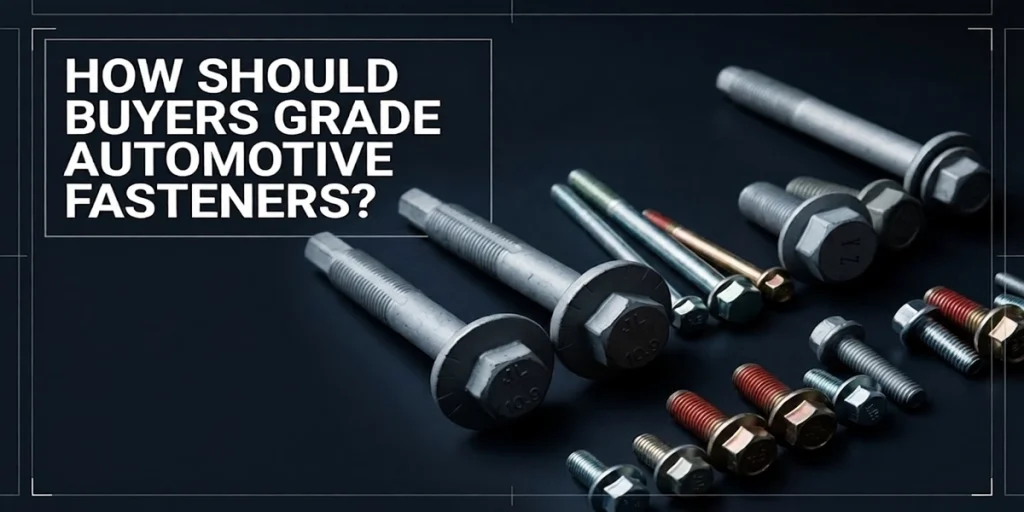
Gli acquirenti dovrebbero classificare i fissaggi automobilistici controllando la classe di resistenza o la marcatura del grado rispetto all'applicazione. I fissaggi metrici utilizzano spesso classi come 8.8, 10.9 e 12.9. Le parti in pollici possono utilizzare marcature di grado SAE.
Il grado informa gli acquirenti sul livello di resistenza meccanica. Ma un grado più alto non è sempre la scelta giusta. Anche la parte di accoppiamento, il valore di coppia, la profondità della filettatura e il materiale devono corrispondere al grado.
Ad esempio, quando un disegno richiede un bullone flangiato, gli acquirenti possono confrontare i campi di dimensione, materiale e finitura con bulloni a testa esagonale flangiati DIN6921 prima di confermare ciò di cui il progetto ha bisogno. Questo tipo di pagina prodotto è utile perché separa i dettagli di dimensione, materiale, finitura, attrezzatura di prova e imballaggio.
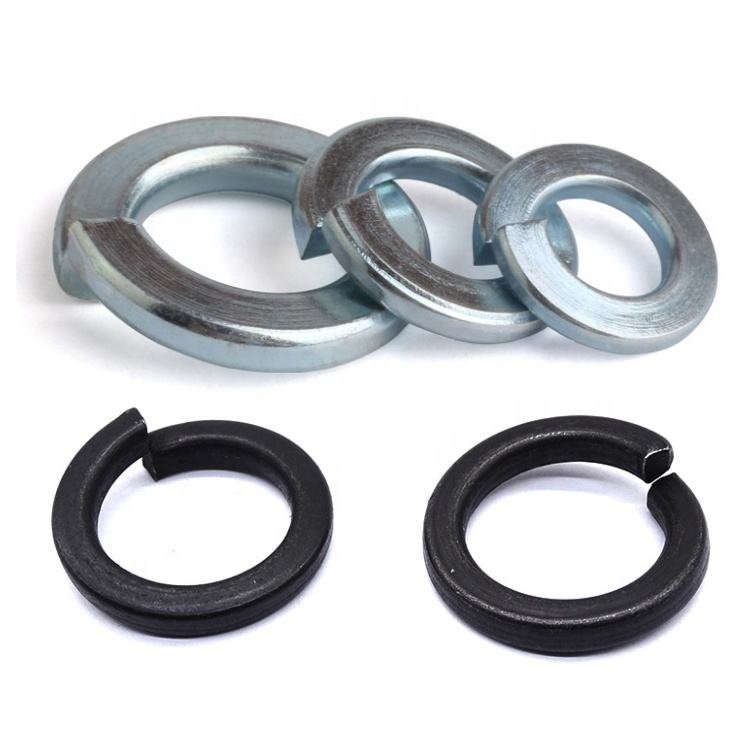
DIN127 Rondelle elastiche di sicurezza nere
Maggiori dettagliCosa ti dicono i codici di dimensione e tolleranza del filo?
I codici di dimensione e tolleranza del filo ti dicono se il fissaggio può adattarsi correttamente alla parte di accoppiamento. Il solo diametro non è sufficiente.
Per le filettature metriche, gli acquirenti potrebbero vedere codici come M6, M8 o M10, seguiti da un passo come 1.0, 1.25 o 1.5. Il passo spiega la distanza tra le filettature. Se il passo è sbagliato, la parte potrebbe iniziare a filettare ma danneggiare l'unione.
Anche i codici di tolleranza sono importanti. Un disegno può includere requisiti di accoppiamento come 6g o 6H. Questi codici aiutano a definire quanto stretta o larga dovrebbe essere la relazione tra le filettature.
Se il numero di parte non mostra il passo o la tolleranza, chiedere al fornitore prima del campionamento. Questo è uno degli errori più comuni quando si confrontano tipi di fissaggi automobilistici provenienti da mercati diversi.
Cosa significano le abbreviazioni del trattamento superficiale?
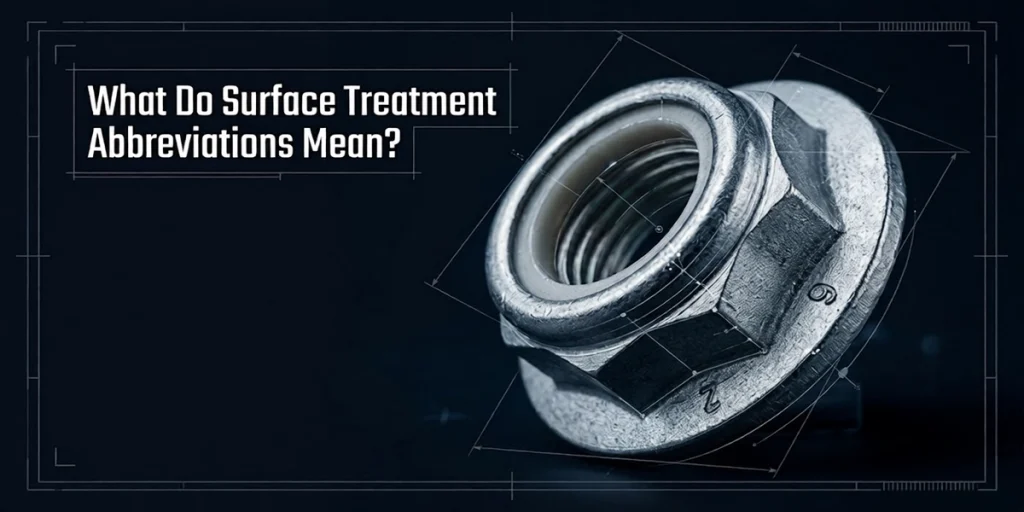
Le abbreviazioni del trattamento superficiale descrivono la finitura applicata al fissaggio. Esempi comuni includono zincato, zinco nero, ossido nero, nichel, cromo, zincato a caldo e Dacromet.
La finitura influisce più dell'aspetto. Può influenzare la resistenza alla corrosione, lo spessore del rivestimento, l'attrito e il controllo della coppia. Un rivestimento che funziona per un pannello della carrozzeria potrebbe non essere corretto per un'unione del motore o del telaio.
Per giunti autobloccanti o relativi alla coppia, gli acquirenti dovrebbero leggere attentamente la descrizione del dado. Quando la parte necessita di una funzione di bloccaggio controllata, dadi flangiati autobloccanti interamente metallici possono essere utilizzati come riferimento per controllare i campi di dimensione, materiale, finitura, forma e standard prima di confermare il disegno finale.
Quali sono i tre tipi di fissaggi automobilistici che gli acquirenti dovrebbero decodificare per primi?
Tre tipi di fissaggi automobilistici che gli acquirenti dovrebbero decodificare per primi sono bulloni, dadi e rondelle. Questi appaiono in molti sistemi di veicoli e spesso contengono importanti dettagli di specifica.
I bulloni di solito necessitano di controlli per diametro, passo, lunghezza, stile della testa, grado e rivestimento. I dadi necessitano di controlli per corrispondenza della filettatura, forma, classe di resistenza e funzione di bloccaggio. Le rondelle necessitano di controlli per diametro interno, diametro esterno, spessore, materiale e finitura superficiale.
Altri tipi di fissaggi automobilistici includono viti, perni, rivetti, boccole, inserti elicoidali e parti stampate. Queste parti spesso richiedono un maggiore controllo del disegno poiché la loro forma può influire sull'accoppiamento e sull'assemblaggio.
Per gli ordini B2B, gli acquirenti non dovrebbero approvare i tipi di fissaggi automobilistici solo per nome. Il disegno, il campione e la stringa di specifiche dovrebbero corrispondere prima della produzione di massa.
Come può il test confermare la specifica?
Il test può confermare se il fissaggio consegnato corrisponde alla stringa di specifiche. I controlli visivi sono utili, ma non possono confermare tutto.
Il materiale potrebbe necessitare di verifica tramite uno spettrometro a lettura diretta. La resistenza potrebbe necessitare di test di trazione. La durezza può essere verificata tramite metodi Brinell, Rockwell o Vickers. Potrebbero essere necessari anche test di spessore del rivestimento e test in nebbia salina quando la resistenza alla corrosione è importante.
È qui che CNRL Fasteners può supportare la revisione tecnica. L'azienda elenca attrezzature di prova come calibri, calibri passanti/non passanti, macchine per prove di trazione, durometri, tester per nebbia salina, strumenti per lo spessore della placcatura e attrezzature di rilevamento 3D nelle sue pagine di prodotto.
Per i team di approvvigionamento, questo supporto di test aiuta a ridurre le controversie. L'acquirente può confrontare il risultato dell'ispezione con il disegno invece di fare affidamento solo sulle descrizioni del fornitore.
Cosa dovrebbe essere incluso in un ordine chiaro di fissaggi B2B?
Un ordine di fissaggi B2B chiaro dovrebbe includere la specifica completa, non solo il nome del pezzo. Questo aiuta il fornitore a quotare, campionare, produrre e ispezionare il pezzo giusto.
Un ordine pratico dovrebbe includere:
- Tipo di pezzo: Bullone, dado, rondella, perno, rivetto, manicotto o vite
- Norma: ISO, DIN, SAE, ANSI, JIS, GB o disegno personalizzato
- Dimensioni: Diametro, passo della filettatura, lunghezza e tolleranza
- Grado: Classe di resistenza o requisito di grado SAE
- Materiale: Acciaio al carbonio, acciaio legato, acciaio inossidabile o materiale personalizzato
- Trattamento superficiale: Zinco, zinco nero, nichel, cromo, ossido nero, Dacromet o H.D.G
- Test: Durezza, resistenza alla trazione, spessore del rivestimento o richiesta di nebbia salina
- Imballaggio: Cartone sfuso, sacchetto etichettato, kit o imballaggio specifico per il cliente
Questo rende l'ordine più facile da controllare prima del campionamento e più facile da ispezionare prima della spedizione.
Leggi il codice prima di approvare la produzione
I tipi di fissaggi automobilistici devono essere decodificati prima che gli acquirenti approvino campioni o produzione di massa. Il nome del prodotto è solo il primo indizio. Il codice completo indica agli acquirenti le dimensioni, la filettatura, lo standard, il materiale, il grado, il rivestimento e il requisito di ispezione.
Per gli ingegneri, questo protegge l'assemblaggio. Per i team di approvvigionamento, riduce ordini errati, richieste di preventivo poco chiare e controversie con i fornitori.
Prima di confermare un ordine, inviare a CNRL Fasteners il disegno, il campione, il numero di parte, l'area di applicazione e i requisiti di test. Ciò fornisce al fornitore informazioni sufficienti per verificare se la stringa di specifiche corrisponde alle condizioni di lavoro reali.