Custom Stamping Parts in Energy Storage Systems: Applications and Benefits
Energy storage devices use precisely made metal parts to ensure safety and ease of assembly.
From battery cells to the casing frame, the stamping parts will help lower production costs and offer stable operations.
和 battery energy storage solutions gaining market growth, metal stamping parts manufacturers want parts that can be easily produced, easily transported, and readily assembled.
Here, the stamping process becomes highly essential. Not only does it promote mass production, but it also ensures consistency in part sizes.
This article will explore the role of stamped parts in energy storage devices, their advantages, and the importance of production capability.
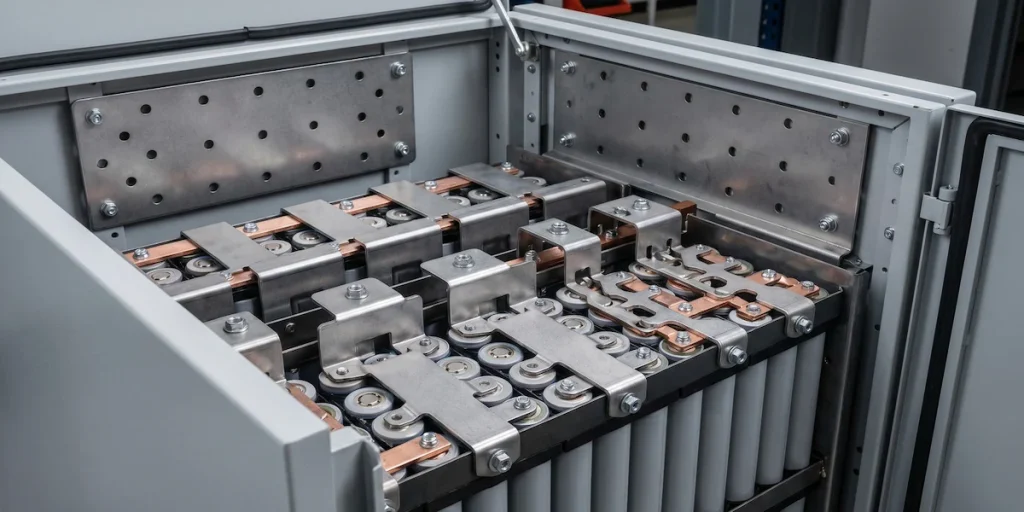
How Are Custom Stamping Parts Used in Battery Assemblies?
Different energy storage systems require different structural layouts.
Because of this, many manufacturers use custom stamping parts to match specific battery sizes and enclosure designs.
These parts are often integrated with fastening systems during assembly.
Battery Module Brackets and Holders
Metal stamping brackets are widely used for securing battery modules inside racks and cabinets.
These brackets help stabilize modules during charging cycles and transportation. Proper bracket positioning also improves assembly consistency during production.
In high-density battery systems, accurate bracket dimensions help maintain safe spacing between modules.
Busbar Supports and Connection Plates
Stamped parts are also used to support electrical connection systems inside battery packs.
Connection plates and busbar supports help organize conductive components while reducing movement caused by vibration.
These components must maintain dimensional accuracy because small misalignment may affect electrical contact performance.
Enclosure Reinforcement Parts
Large battery containers experience stress during transportation and installation.
Stamped reinforcement plates strengthen cabinet structures without significantly increasing overall weight. This helps improve handling efficiency during shipping and on-site assembly.
Some custom stamping components are also combined with welded fasteners to simplify final installation.
What Benefits Does Metal Stamping Provide for Energy Storage Projects?
Energy storage manufacturers often prioritize cost control, production speed, and assembly consistency. Stamping processes support all three areas.
Compared with machining or casting, stamping usually requires less raw material removal.
Lower Production Cost
Material efficiency is one reason stamped parts remain widely used.
The stamping process minimizes scrap generation during repeated production cycles. Lower processing time also helps reduce labor costs per unit.
For large battery projects, these savings become significant across thousands of assemblies.
Consistent Product Dimensions
Dimensional consistency matters in battery systems because components must fit within tight assembly spaces.
Accurate forming helps reduce installation problems during final assembly.
Consistent dimensions also improve compatibility between stamped parts and fastening systems.
Reduced Assembly Time
Stamped components are often designed with installation efficiency in mind.
Features such as formed tabs, positioning holes, and integrated mounting areas simplify assembly procedures.
This reduces production downtime and improves workflow inside battery manufacturing lines.
How Do Fasteners and Stamped Components Work Together?
Stamped parts rarely operate alone in energy storage systems. Most assemblies also depend on bolts, nuts, washers, or locking hardware.
Combining these components properly improves structural performance and assembly efficiency.
By Integrating Structural Assemblies
Many battery pack structural parts include pre-installed fasteners or threaded features.
This reduces secondary processing steps during assembly. It also helps maintain positioning accuracy across repeated production runs.
CNRL supports integrated solutions by combining stamped components with fastening products for industrial energy applications.
By Improving Vibration Resistance
Battery systems experience vibration during transportation and operation.
Combining stamped reinforcement parts with suitable locking fasteners helps reduce joint movement over time.
Proper fastening design also improves long-term structural stability in large battery cabinets.
By Simplifying Maintenance and Replacement
Modular energy storage systems require easier maintenance access.
Stamped assemblies with organized fastening points simplify inspection and replacement procedures. This helps reduce maintenance time during field servicing.
What Materials Are Commonly Used for Energy Storage Stamped Parts?
Material selection depends on strength requirements, environmental exposure, and conductivity needs.
Different battery systems may use different material combinations.
Carbon Steel and Stainless Steel
Carbon steel is often used for structural support parts because of its strength and forming flexibility.
不锈钢 is preferred when corrosion resistance becomes important, especially in outdoor battery enclosures.
Surface coatings are also applied to improve durability under humid operating conditions.
Aluminum Alloys
Aluminum helps reduce overall system weight.
This material is commonly used in battery housings, support frames, and lightweight structural panels. Aluminum also offers good thermal conductivity for heat management applications.
Surface Treatments and Finishing
Stamped parts may receive additional finishing processes such as:
| Surface Treatment | Main Purpose |
| Zinc plating. | Corrosion protection. |
| Powder coating. | Surface durability. |
| Nickel plating. | Electrical performance. |
| Passivation. | Surface stability. |
The selected finish depends on operating conditions and installation requirements.
Why Does Manufacturing Capability Matter in Stamping Production?
Production capability directly affects consistency, lead time, and tooling flexibility. Energy storage projects often require a stable supply during large-volume production schedules.
Importance of Process Expertise
Experienced process planning helps reduce forming defects and dimensional variation.
一个 stamping parts manufacturer must also understand material springback, die wear, and tolerance control.
These factors affect final assembly quality inside battery systems.
Equipment Capacity and Production Stability
CNRL operates 15 stamping machines to support different production volumes and component sizes.
This allows flexible manufacturing for both simple brackets and complex structural parts.
Comprehensive stamping process expertise also helps improve tooling coordination and production efficiency.
Inspection and Quality Control
Inspection remains important for battery-related structural components.
Dimensional checks, surface evaluation, and material verification help maintain stable product quality during repeated production cycles.
Many energy sector buyers also request traceability documentation for critical structural assemblies.
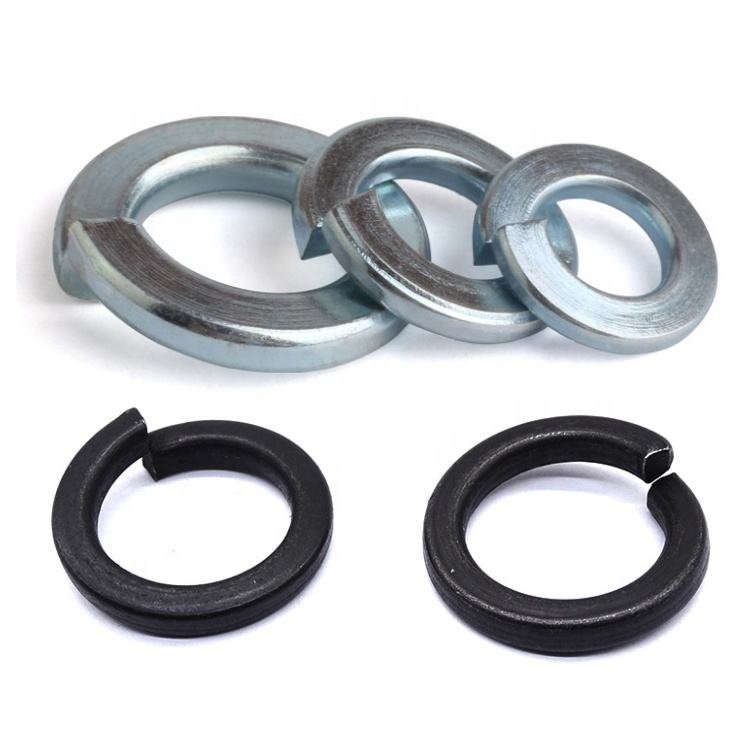
DIN127 黑色开口弹簧锁紧垫圈
更多详情Conclusion: How Will Stamped Components Continue Supporting Energy Storage Growth?
Energy storage systems continue to become larger and more compact at the same time. This increases demand for lightweight and accurately formed structural parts.
Stamped components support this trend through scalable production and flexible design options.
As battery systems evolve, manufacturers will continue improving material selection, structural integration, and assembly efficiency.
This makes stamping an important process for future energy infrastructure projects.


