Aftermarket vs. OEM Automotive Fasteners: How Big Is the Quality Gap?
What Are the Differences Between OEM and Aftermarket Options?
The primary differences involve production control, sourcing flexibility, and intended application use. OEM parts duplicate original production standards exactly. Meanwhile, automotive aftermarket fasteners serve as substitutes offering better cost efficiency.
The debate over OEM automotive fasteners v aftermarket choices is common in vehicle repair. Buyers must match the replacement bolt to the specific mechanical application risk. Safety-critical suspension joints require precise factory specification matching.
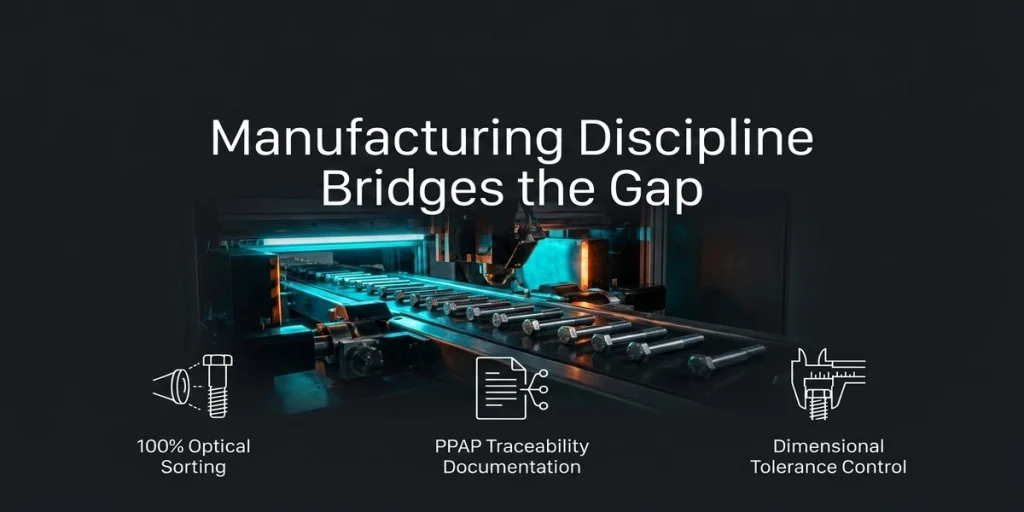
An aftermarket component performs optimally when production is strictly controlled. The primary quality gap appears in supplier validation documentation and testing methods. A disciplined manufacturer constantly applies exact dimensional tolerance controls during fabrication. This process ensures correct component fitment during final vehicle assembly lines.
How Do Quality, Materials, and Fatigue Life Compare?
The quality gap hinges on specific material grades, thread manufacturing, and fatigue validation. Both supply channels utilize standard carbon and alloy steels. However, strict manufacturing methods determine if a bolt survives mechanical stress.
Material Specifications and Grades
Evaluating OEM automotive fasteners and hardware requires analyzing material strength carefully. Fastener performance depends heavily on both yield and tensile strength limits. Automotive engineers specify high tensile grades to handle severe engine preloads.
Carbon steel handles standard automotive strength and usually requires surface coating. Alloy steel serves heavier automotive demands like class 10.9.
- Grade 8.8: Common standard for general structural chassis brackets.
- Grade 10.9: High-strength steel used in engine and suspension areas.
- Grade 12.9: Specialized high-torque applications requiring maximum clamping force.
Yield strength dictates maximum structural stress before permanent physical deformation occurs. Tensile strength defines the ultimate pulling load before complete structural fracture.
Excessive tensile strength reduces fastener ductility drastically over time. Decreased ductility makes the steel bolt brittle and prone to failure. Proper material selection ensures joints survive harsh operating thermal cycles.
Thread Design and Fatigue Life
Mechanical thread design greatly impacts the overall structural fatigue life. Rolled threads are formed under extreme physical pressure during production. This manufacturing method reduces stress risers, increasing fatigue strength against vibration. OEM bolts typically utilize rolled threads to withstand repetitive vehicle loading.
Conversely, some aftermarket suppliers use cutting taps for thread creation. Cut threads leave rougher metal surfaces and sharp thread peaks behind. This specific manufacturing difference drastically shortens structural fatigue life. Always verify the thread creation method when sourcing automotive bolts.
Mechanics frequently struggle with seized bolts during vehicle maintenance. Dry installation of alloy fasteners can cause sudden thread galling. Applying anti-seize lubricants helps prevent this thread locking problem. Finding good sources for OEM automotive fasteners, such as bolts, nuts, and hardware mechanics, is also vital.
What Data Defines Fastener Performance?
Documented testing metrics define the true structural capabilities of automotive fasteners. This data proves whether replacement hardware matches original factory requirements. For example, laboratory tensile testing measures yield stress changes over time. The comparison table below outlines typical variables between supply channels.
| 特征 | OEM Fasteners | Aftermarket Fasteners |
| Specifications | Original vehicle standards | Replacement standards |
| Quality Validation | OEM approval process | Supplier quality system |
| Market Cost | Generally higher | More cost-effective |
| 交货时间 | Longer waiting periods | Faster delivery schedules |
| 可追溯性 | Full batch records | Varies by manufacturer |
Full traceability tracks each fastener batch from raw material to shipment. This documentation provides better quality control for automotive aftermarket fasteners. Strict PPAP documentation helps buyers verify quality before large-scale procurement. This data can assist your internal procurement sourcing strategies.
Torque-to-Yield Fastener Reuse
Engine assembly frequently utilizes specialized torque-to-yield bolt designs. These fasteners stretch into the plastic range during initial vehicle installation. This physical stretching cold works the metal and alters its mechanical properties. Reusing these yielded bolts reduces material ductility and lowers overall joint durability.
Laboratory tests show yield stress increases significantly after repeated bolt torquing. Meanwhile, relative elongation drops, signaling a dangerous loss of essential fastener ductility. A single engine bolt failure can cause catastrophic engine head gasket leaks. Therefore, professional mechanics should always discard torque-to-yield fasteners after just one use.
What Are the Technical Requirements for Critical Joints?
Safety-critical joints demand exact property class matching and precise shank lengths. Deviating from factory specifications risks shear load failures or catastrophic component separation. Technicians must always consider these technical factors for successful automotive component replacement:
- Match the property class exactly, such as metric 10.9.
- Verify shank length to prevent dangerous shear loads on threads.
- Select surface coatings based on heat and road salt exposure.
- Match locking methods like prevailing torque lock nuts.
Modern vehicles introduce unique fastening challenges for different structural materials. Repeated loosening wears down soft aluminum threads very quickly. Knowing how helicoil inserts in EV aluminum components function can minimize issues.
How Can CNRL Elevate Your Supply Chain?
CNRL empowers your aftermarket parts supply chain by manufacturing exact OEM-grade fasteners. Selecting correct automotive aftermarket fasteners determines long-term vehicle repair longevity. We supply chassis and safety component fasteners to top-tier automakers globally. Our vast manufacturing facility spans over 33,000 square meters for production.
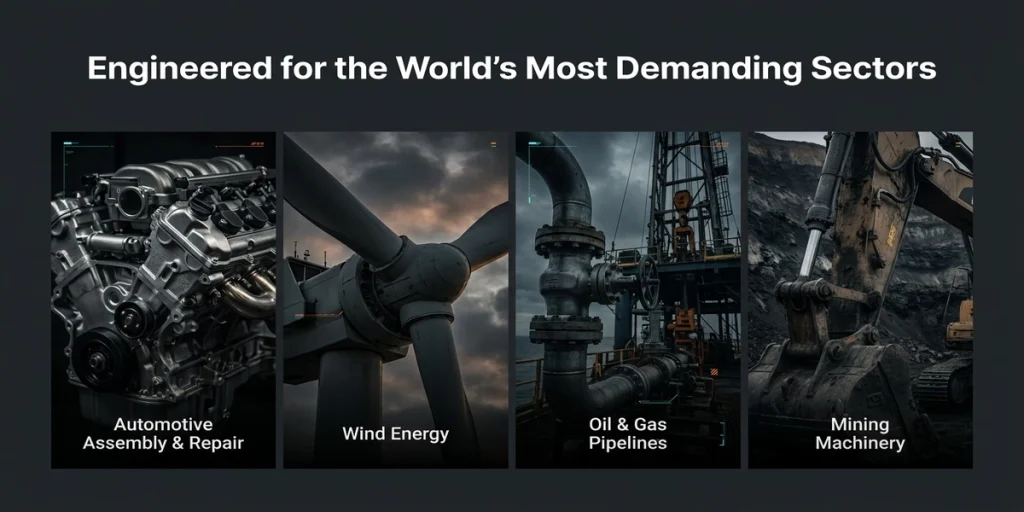
CNRL’s OEM-grade quality empowers large-scale aftermarket parts chains to succeed globally. This consistency is backed by our strict IATF 16949 certification standards. Production includes 100% optical sorting and fully automated magnetic particle testing. We also utilize computer-monitored eddy current testing for defect detection. Contact CNRL today for your precision automotive fastener needs.


