Automotive Fixings vs. Fasteners: A Clear Guide to Professional Terminology
Automotive fixings and fastenings ensure vehicle stability and passenger safety. Fixings create permanent connections for long-lasting structural support. Fasteners allow for removable joints, enabling easier maintenance and quick repairs. Selecting the correct component prevents failures in harsh vehicle environments.
How Do Automotive Fixings and Fastenings Build Joint Permanence and Structural Integrity?
Both component types must endure intense vibration and structural loads. Industry terminology classifies these parts based on their functional permanence. Proper categorization aids in precise mechanical engineering design and procurement.
Engineers must know the exact difference between fixings and fasteners. Proper part classification prevents critical joint failures in complex vehicle assemblies. Understanding automotive fixings and fasteners streamlines initial B2B product selection. This knowledge directly improves overall assembly line efficiency and vehicle safety.
Fixings for Permanent Connections
Fixings create permanent, robust connections for long-lasting structural support. These specialized components keep materials firmly secured under intense mechanical stress. They are intentionally not designed for frequent removal or minor adjustments. Engineers utilize them when assemblies must remain strictly intact indefinitely.
Common fixing types include:
- Concrete anchors secure heavy manufacturing shop equipment directly to floors.
- Industrial wall plugs provide long-lasting support for structural facility elements.
- Permanent installation severely reduces the risk of loosening from extreme vibration.
Fasteners for Removable Joints
Fasteners secure parts temporarily for future system disassembly and maintenance. They are strictly critical for quick repair and routine component replacement. Proper automotive fastening relies heavily on specific nuts, bolts, and clips.
Some standard fastener types are the following:
- Bolts mate with internal threads to forcefully clamp metallic parts together.
- Screws pierce softer material substrates to securely form their own threads.
- Clips secure lightweight interior trim panels without penetrating underlying automotive substrates.
What Do Vehicle Systems Need to Function With Synergy?
Vehicle systems require fasteners and other structural components to work synergistically. Proper physical integration ensures stability across the chassis, body, and powertrain. Engineers actively optimize automotive fastening solutions to reduce overall vehicle weight. Weight reduction directly improves fuel efficiency and overall passenger driving performance.
Powertrain and Chassis Integration
Fasteners endure extreme operating conditions within internal combustion engine systems. They must actively resist high temperatures and constant physical vibration forces. Selecting standard fastening methods in automotive assembly distinctly prevents mechanical wear.
Parts like EV helicoil inserts effectively protect soft aluminum automotive threads. Chassis components utilize heavy high-tensile bolts to absorb sudden impact forces. Exterior body panels utilize lightweight plastic clips to prevent material corrosion.
Overcoming Buyer Pain Points
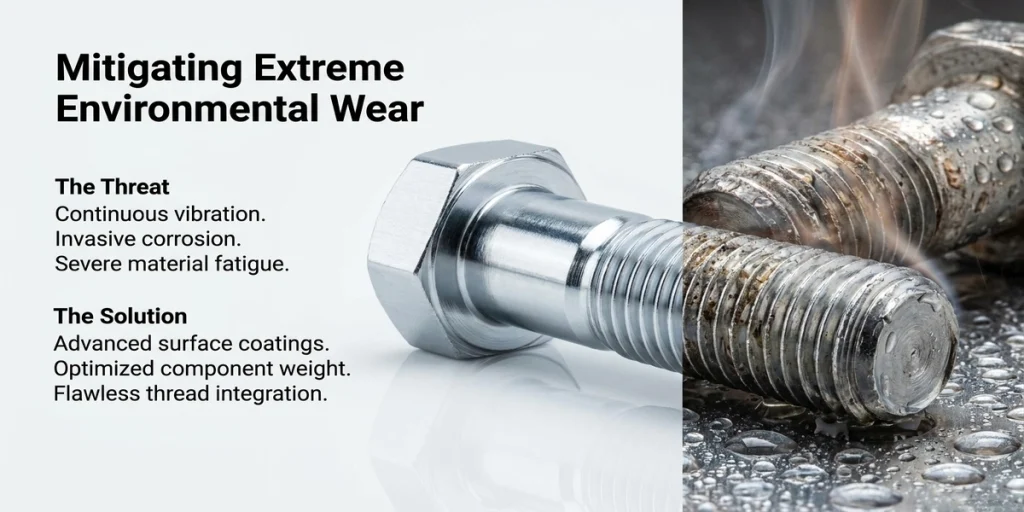
Procurement buyers often struggle with rapid thread wear in harsh environments. Specific surface coatings improve component longevity and prevent destructive rust formation. This manufacturing practice minimizes costly warranty claims and expensive vehicle recalls. Proper automotive fixings and fastenings selection prevents unexpected mechanical shearing failures.
What Are the Engineering Specifications and Material Data?
Procuring automotive fastening devices requires strict adherence to standardized engineering parameters. Buyers face daily pain points regarding severe material fatigue and corrosion. Industry standards like ISO, DIN, and ASME dictate strict quality parameters. Component suppliers must meet strict IATF specifications for global automotive distribution.
Material Properties and Testing Protocols
Manufacturing materials range from durable stainless steel to lightweight structural plastics. Metal components physically withstand high engine heat and extreme mechanical loads. Plastic clips are highly ideal for interior parts avoiding thermal exposure. Engineers depend entirely on rigorous testing protocols to verify material parameters.
The table below shows some common fastener testing parameters:
| Test Type | 描述 | Objective |
| Proof Load | Minimum force sustained without permanent deformation. | Ensure structural integrity under mechanical stress. |
| 抗拉强度 | Maximum force applied before the fastener fractures completely. | Prevent catastrophic joint structural failure. |
| Torque-Tension | Input torque needed to achieve optimal bolted joint tension. | Optimize automated robotic tightening procedures. |
| Salt Spray | Hours in a test chamber before physical corrosion appears. | Verify environmental weathering resistance capabilities. |
What Are the B2B Product Selection and Standards?
Strict parts production requires tight tolerances and standardized manufacturing processes. Buyers must thoroughly verify a factory’s credibility. They must also review the manufacturer’s distinct capabilities to fit their needs.
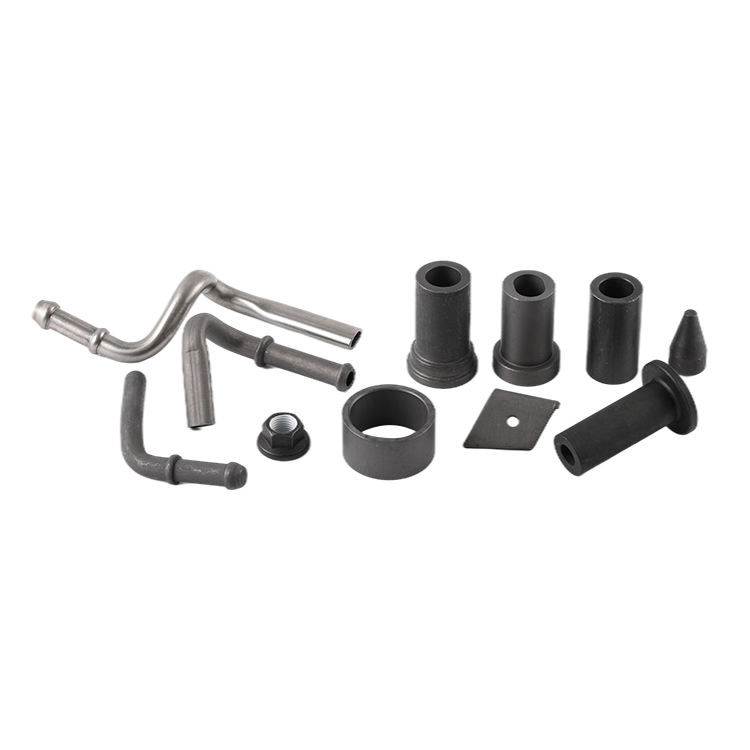
IATF 16949认证汽车卡车底盘紧固件OEM衬套螺母排气吊杆螺栓
更多详情Choosing CNRL as Your Component Supplier
CNRL maintains ISO/TS16949:2016 certification, proving its verified manufacturing expertise. The company utilizes cold forming and mechanical thread rolling manufacturing techniques. CNRL’s custom stamping parts support complex energy storage frame assembly. Its facilities also export to global automotive and energy markets.
CNRL efficiently produces mechanical components with measured diameters from 3mm to 30mm. These metallic components easily meet property classes strictly ranging from 4.8 to 12.9. Fastening methods in automotive design rely entirely on these technical specifications.
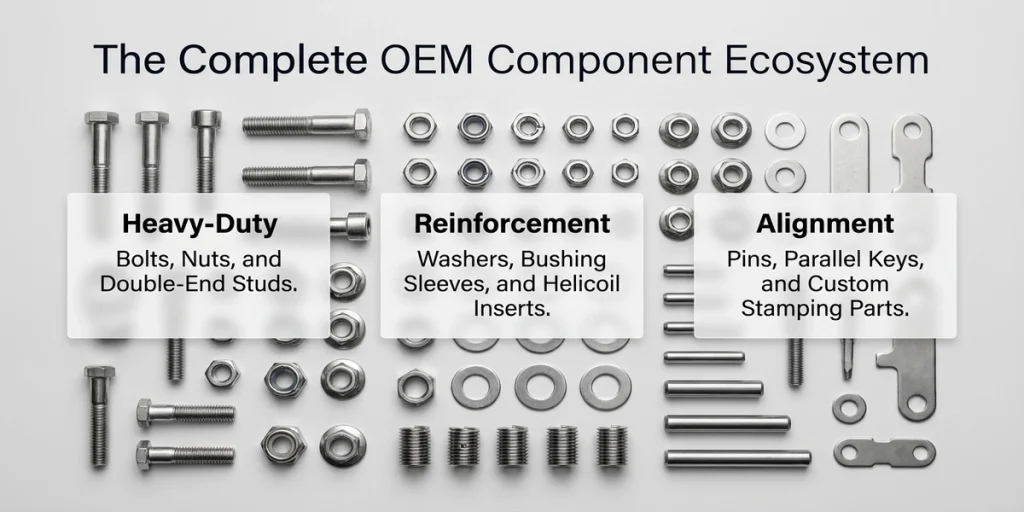
CNRL offers eight distinct categories of customized metal parts for B2B buyers:
- Bolts for heavy-duty structural vehicle clamping and large industrial assemblies.
- Nuts featuring specialized mechanical thread pitch measurement parameters.
- Washers to intentionally increase the physically applied bearing surface area.
- Pins for the precise alignment of complex moving mechanical assemblies.
- Helicoil inserts to effectively reinforce soft internal component threads.
- Stamping parts for geometric applications and custom vehicle chassis assemblies.
- Bushing sleeves for active mechanical friction reduction between moving parts.
- Parallel keys to physically secure and lock rotating transmission drive shafts.
Technical drawing standards help ensure exact production dimensions for Tier 1 suppliers. These drawings help guide R&D personnel and global procurement professionals. Proper structural selection of automotive fixings and fastenings remains crucial commercially. It ensures all individual components fit perfectly within complex automotive vehicle subsystems.
结论
It is vital that fasteners and other automotive components work seamlessly together. This active mechanical synergy guarantees overall vehicle safety, performance, and long-term durability. Using the exact automotive fastening solutions strictly prevents critical dynamic mechanical failures. Choose CNRL custom fasteners for precise, certified, and strictly durable automotive needs.


