23 6月,2026
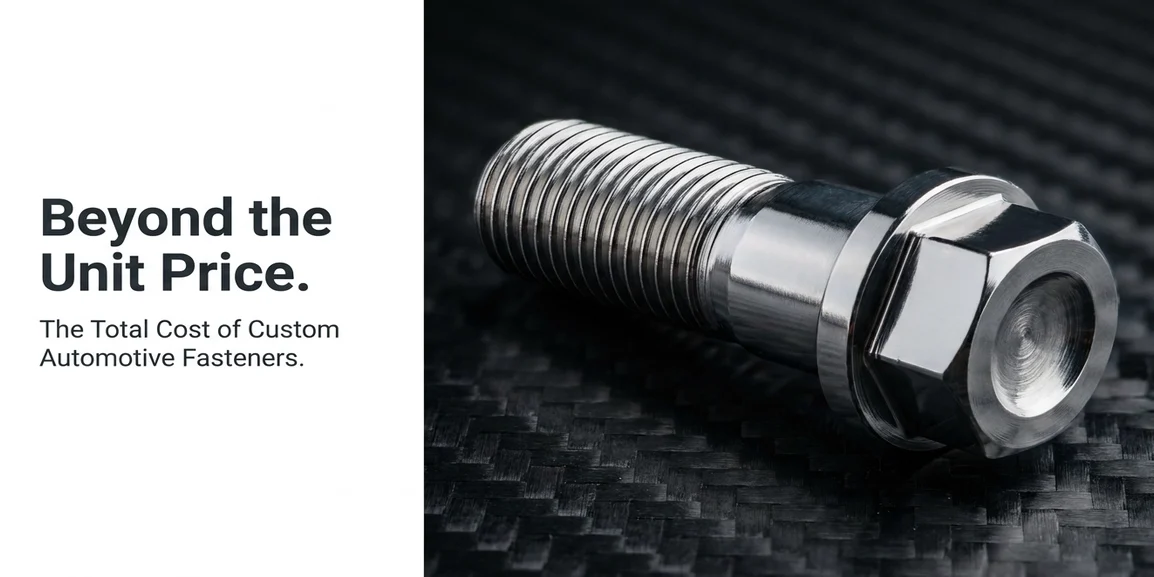
Custom Automotive Fasteners: When Is It Worth Investing In Non-Standard Parts?
Custom automotive fasteners are worth investing in when a standard part creates extra components, difficult assembly or fit problems. The unit price may be higher, but the total cost can be lower when one part replaces several loose parts. For procurement directors and project managers, the decision should balance cost, function and risk. A custom part makes sense when it reduces part count, saves space, supports lightweighting or solves a repeated assembly issue. When Do Standard Automotive Fasteners Stop Working Well? Standard automotive fasteners stop working well when the joint needs a special shape, load path, coating or installation method. This often happens in engine, chassis, body, transmission or brake […]
23 6月,2026
Automotive Fixings vs. Fasteners: A Clear Guide to Professional Terminology
Automotive fixings and fastenings ensure vehicle stability and passenger safety. Fixings create permanent connections for long-lasting structural support. Fasteners allow for removable joints, enabling easier maintenance and quick repairs. Selecting the correct component prevents failures in harsh vehicle environments. How Do Automotive Fixings and Fastenings Build Joint Permanence and Structural Integrity? Both component types must endure intense vibration and structural loads. Industry terminology classifies these parts based on their functional permanence. Proper categorization aids in precise mechanical engineering design and procurement. Engineers must know the exact difference between fixings and fasteners. Proper part classification prevents critical joint failures in complex vehicle assemblies. Understanding automotive fixings and fasteners streamlines initial B2B […]
20 6月,2026
Aftermarket vs. OEM Automotive Fasteners: How Big Is the Quality Gap?
What Are the Differences Between OEM and Aftermarket Options? The primary differences involve production control, sourcing flexibility, and intended application use. OEM parts duplicate original production standards exactly. Meanwhile, automotive aftermarket fasteners serve as substitutes offering better cost efficiency. The debate over OEM automotive fasteners v aftermarket choices is common in vehicle repair. Buyers must match the replacement bolt to the specific mechanical application risk. Safety-critical suspension joints require precise factory specification matching. An aftermarket component performs optimally when production is strictly controlled. The primary quality gap appears in supplier validation documentation and testing methods. A disciplined manufacturer constantly applies exact dimensional tolerance controls during fabrication. This process ensures correct […]

19 6月,2026
Metric vs. Imperial Automotive Fasteners: What Are the Risks of Mixing Them?
Metric and imperial fasteners use entirely different measurement systems. Mixing these thread types causes stripped threads and joint failure. Fastener mismatch destroys component integrity during automotive assembly processes. Always verify exact thread parameters before any installation. What Are the Differences Between Imperial and Metric Automotive Fasteners? Metric fasteners use millimeter dimensions for diameter and pitch under ISO standards. Imperial fasteners specify diameter in inches and measure threads per inch (TPI). These distinct measurement foundations prevent direct interchangeability between the two systems. Modern vehicles globally utilize metric automotive fasteners for standardized assembly. Legacy American platforms often retain imperial automotive bolts and fasteners. While Unified National Coarse (UNC) and metric threads share […]
18 6月,2026
Finding the Perfect Fastener Solution for Your Vehicle: A Professional Selection Framework
Selecting the right automotive fastener solution requires strict engineering validation. Engineers must evaluate load, vibration, and environmental factors. A systematic framework prevents costly joint failures and assembly issues. How Do You Choose an Automotive Fastener Solution? To choose automotive fasteners, you must match mechanical, environmental, and cost requirements. Fastener selection is not just a procurement task. It is a system-level engineering decision. Incorrect choices often cause joint fatigue, loosening, or corrosion. Engineers must evaluate joint stiffness, preload control, and cyclic fatigue. Framework for Mechanical and Environmental Matching The right automotive fastener system balances bolt stiffness against joint stiffness. If a joint separates under load, the bolt absorbs the cyclic stress. […]

15 2026年4月
フランジ用スタッドボルト:風力タービンをしっかりと固定するファスナー
風力タービンは、クリーンなプロセスで数百万ワットのエネルギーを生成します。スタッドボルトは、タービンを固定する小さな部品です。タワー、ナセル、ハブのすべてのセグメントは、ボルト締めリングフランジを使用して接続されています。間違った締結部品を選択すると、アセンブリ全体が故障する可能性があります。この記事では、スタッドボルトが風力タービンの締結部品として適切な理由について説明します。また、スタッドボルトサプライヤーからフランジ用のスタッドボルトを入手する方法についても説明します。タワー/ハブ接続が最も重要なボルト接合部である理由とは?タワーとナセルの接続部は、回転荷重と重力荷重全体を支えています。この荷重は、ローター、ブレード、およびドライブトレインによって発生します。これは […]
11 2026年4月
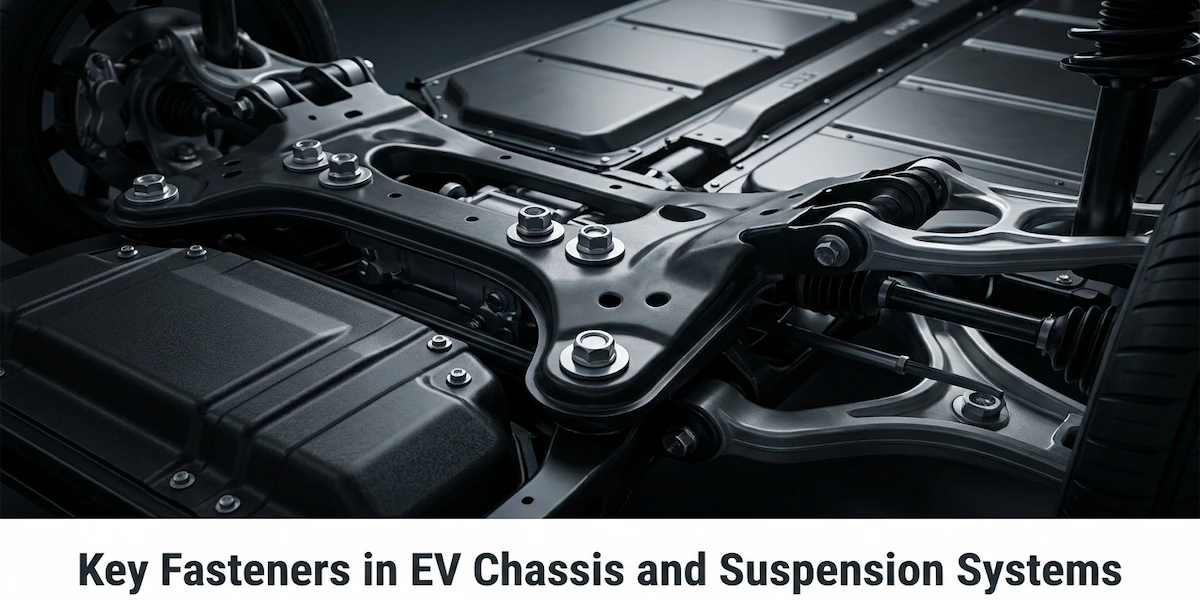
EVシャーシ用ファスナー:車両用高強度ファスナー
電気自動車に必要なファスナーは、内燃機関(ICE)車で使用されるファスナーをあらゆる面で凌駕します。これには、600kgのバッテリーパック重量、永久磁石モーターによる瞬時の高トルク出力、そして絶え間ない熱サイクルが含まれます。EVシャーシのファスナーは、安全性に不可欠な部品です。間違ったボルト、ピン、またはブッシングを使用すると、摩耗するだけでなく、機械的故障につながる可能性もあります。この記事では、EVシャーシおよびサスペンションシステムにおいて最も重要なファスナーの種類について説明します。また、各ファスナーカテゴリの推奨用途についても解説します。EVシャーシのファスナーがICE車よりも大きな負荷に耐えられるのはなぜですか?電気自動車の設計における3つの主要な要因が負荷を増加させます[…]
02 2026年3月
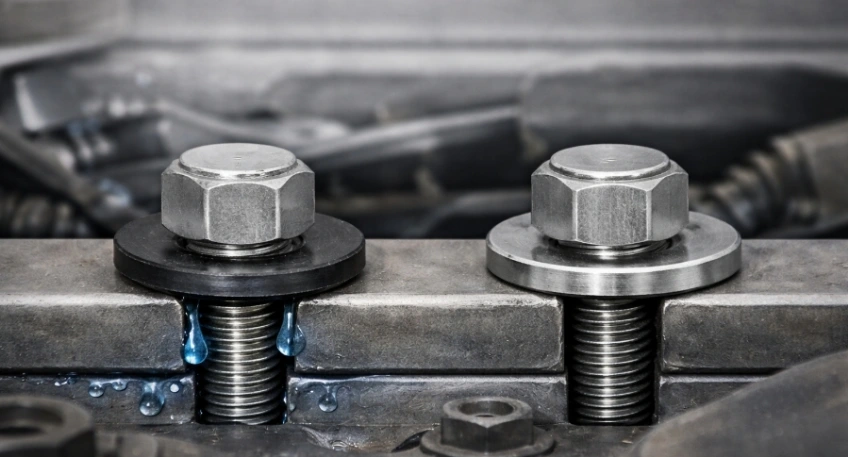
ガスケットとワッシャー:シールと固定における機能的な違いを理解する
ワッシャーとガスケットは見た目がほとんど同じです。どちらも平らで、中央に穴が開いており、ボルトと表面の間に取り付けられます。そのため、エンジニアや調達チームがこれらを互換性のあるものとして扱うことがあるのも無理はありません。しかし、これらは互換性のあるものではありません。間違ったものを間違った場所に使用すると、漏れ、ファスナーの緩み、そして最悪の場合はコストのかかる故障につながります。ここでは、両者の違いと、実際の用途でそれがなぜ重要なのかを説明します。ワッシャーとは?ワッシャーは、ファスナーと併用するように設計された薄い円盤状の部品です。その主な役割は、締め付け力を分散させることです。[…]
26 2026年2月
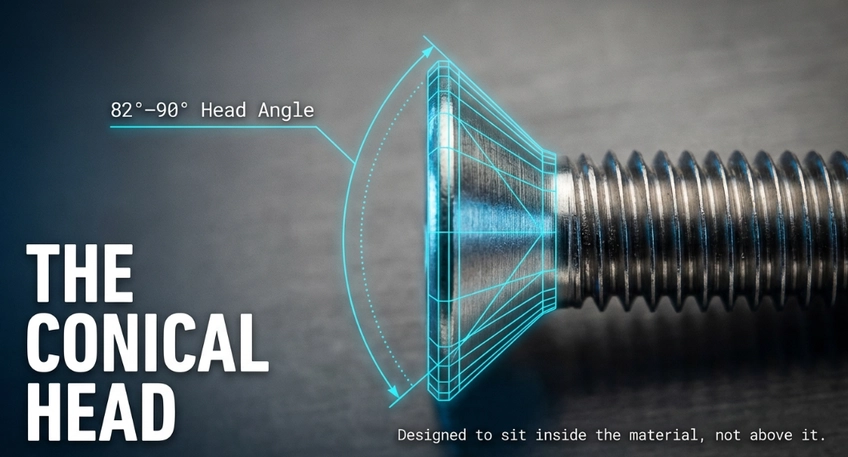
究極のガイド: 皿ねじとその産業用途とは何か?
皿頭ねじは、取り付け後に表面と面一になるように設計された締結具です。このガイドでは、皿頭ねじの仕組み、エンジニアが使用する理由、そして工業および自動車アセンブリにおける適合箇所について説明します。皿頭ねじの基本、ヘッドスタイル、材料の選択、そしてこれらの締結具が現代の製品設計をどのように支えているかについて学びます。CNRLのエンジニアリングチームが自動車業界の内装やシート構造にどのように適用しているかについても学びます。皿頭ねじとは?皿頭ねじは、対応する円錐形の凹部に収まる円錐形のヘッドを備えています。取り付けると、ヘッドの上部が材料の表面と揃います。重要なポイント皿頭ねじとは?皿頭ねじは、円錐形の凹部を作成します[…]


